accessories
Dust Port Adapters: Measure Before You Buy
A dust adapter is a connection component. Buying the correct one begins with the two surfaces it must join, not with a nominal hose label. Record which end fits inside or outside each port and how the connection is retained. A sealed mechanical connection is one purchasing check; extraction-system sizing and dust-control performance require a separate assessment of the tool and collector.
As an Amazon Associate I earn from qualifying purchases. How affiliate links work.
 Dust Collection Hose Adapter - 2-1/2" to 1-7/8" Fitting for Woodworking Tools, Compatible with Table Saw, Bandsaw, Spindle Sander, Miter Saw, Shop Vacuum - Heavy Duty Polymer ConstructionCheck Amazon offer
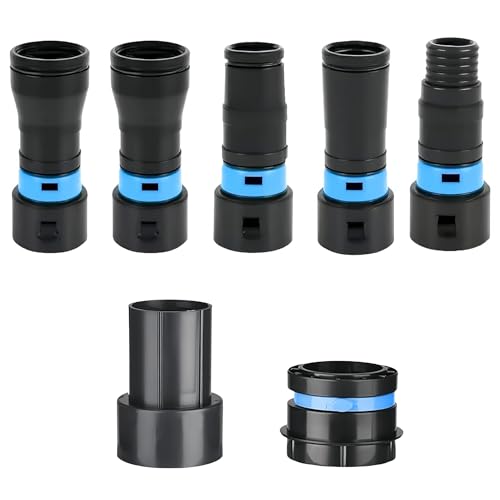 MITANSLE 7 Dust Collection Hose Adapters Kit for Home and Shop Vacuum Hose System, Expanded Adapter Set Fits Most Woodworking Power Tools and Sanders, Compatible With Multi-BrandsCheck Amazon offer
Describe both ends of the connection
Write a short connection sentence before shopping: the machine port connects to a particular hose cuff, using an adapter that fits over or into each side. Then record the relevant inner or outer diameter at those mating surfaces. A product described as a two-inch adapter may use that label for a hose family, a port, or one end of a stepped fitting. Without the connection direction, two matching numbers can still describe parts that do not join. Include photographs and measurements in a supplier inquiry, and ask for a diagram if the listing is ambiguous. A clear mating description is more useful than collecting several adapters with similar titles.
Use named port measurements only for the named machine
The Triton TSPSP650 manual provides separate inner and outer dust-port dimensions: 31.8 mm inside and 36 mm outside. Triton manual. The distinction shows why a single port-size label can be insufficient. Those measurements apply to that documented model and should not be copied to another portable sander. Check the machine's regional version and supplied connector arrangement before ordering. When measuring an existing part, make clear whether the measurement is from the bare machine outlet or a removable accessory already fitted to it. Otherwise the supplier may select an adapter for an adapter rather than for the actual machine interface.
Compare friction, flexible, threaded, and quick connections
Connection styles solve different convenience problems. A flexible cuff can accommodate a stated range, a threaded fitting belongs to a compatible hose, and a quick connector depends on the matching system. Rockler's Dust Right FlexiPort kit combines flexible tool connections with its Click-Connect arrangement. Rockler FlexiPort kit. This is a defined product system, not evidence that all flexible cuffs fit every port. Read the supported range and included components. If you already own one part of a proprietary system, identify that generation or item number before buying another. Similar-looking connectors may have different engagement details that photographs do not reveal clearly.
Account for routing and strain in the shopping decision
A physically compatible adapter still needs room behind or beside the machine. Consider the hose's bend, nearby walls, the machine's storage arrangement, and whether a portable tool must move freely. A long rigid chain of reducers can create awkward leverage at the outlet. Choose a connection layout that can be supported appropriately without pulling on the machine or obstructing intended movement. These are layout considerations, not airflow calculations. A quick-release fitting may be worth considering when one hose serves several compatible tools, but only if each tool connection is verified. Sketch the planned routing before ordering so you can assess the space required for the entire assembled connection.
Keep fit claims separate from collection claims
An adapter listing can establish geometry without proving that your vacuum or collector meets the machine's requirements. Check the tool and extraction equipment instructions for that separate question. Avoid assigning capture percentages or declaring a system sufficient based on port fit alone. Save the adapter SKU, which end faces the tool, the hose model, and any supporting connector item numbers. Rockler identifies its replacement vacuum-side FlexiPort connector by the parent hose-kit number, illustrating why component identity matters during reorders. Replacement connector. If the connection cannot be verified from documentation or supplier confirmation, leave it unresolved rather than treating flexible material as permission to force a fit.
Include the vacuum-end connector in your initial sketch, even when only the machine-end adapter seems missing. An otherwise correct purchase can leave the connection unfinished if the existing hose belongs to a different cuff system.
Questions about Dust Port Adapters: Measure Before You Buy
Should I measure inside or outside diameter?
Measure the surface that will mate with the next component, and state whether the adapter fits over or into it.
Does a fitting adapter prove adequate extraction?
No. Physical connection and extraction suitability are separate checks.
Are quick connectors interchangeable?
Verify the exact connector system and component generation; appearance alone is insufficient.

