Curved edges
A vertical spindle presents a small abrasive surface to an inside curve. Choose a diameter that follows the profile without flattening the shape.
Plan curved workChoose the machine. Match the abrasive.
Find an oscillating spindle sander that fits your projects, then choose the sleeves and setup around it. Compare exact machines, understand the tradeoffs and put the workshop tools to work.
Explore the buying guideA vertical spindle presents a small abrasive surface to an inside curve. Choose a diameter that follows the profile without flattening the shape.
Plan curved workA belt-and-spindle combination adds a belt surface for suitable straight-edge tasks. Compare changeover, support and both abrasive systems.
Compare combination machinesMoving the tool to the work differs from feeding a workpiece at a stationary table. Look at support, control and the approved mounting arrangements.
Explore portable sandersMatch diameter and height to the exact model. Then check the abrasive construction, retaining hardware and any revision-specific requirements.
Understand the sleeve systemThree starting points to investigate
These examples illustrate different machine choices. They are not ranked by hands-on testing. Read each model guide for the evidence, regional differences and unresolved specifications.
As an Amazon Associate I earn from qualifying purchases. How affiliate links work.
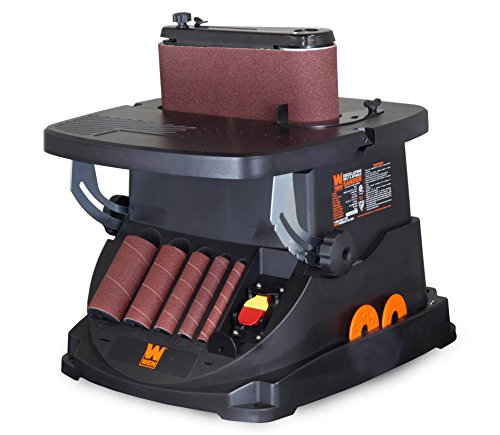
Belt + spindle
combo · 4.5 in sleeve height
The 6524 combines spindle sanding with a 4-by-24-inch belt, useful when one station must handle concave profiles and straight edges. Its documented spindle speed is 2000 RPM; the much higher motor RPM is a different measurement.
Check Amazon offer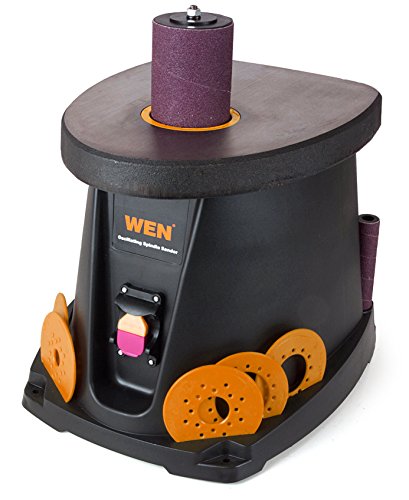
Spindle sander
spindle · Sleeve height not confirmed
Six documented sleeve diameters, from 1/2 through 3 inches, give the fixed-table 6510T a wider upper diameter than WEN's AT6535. Choose by the curves and supported workpiece height, and keep replacement sleeve length separate from that height limit.
Check Amazon offer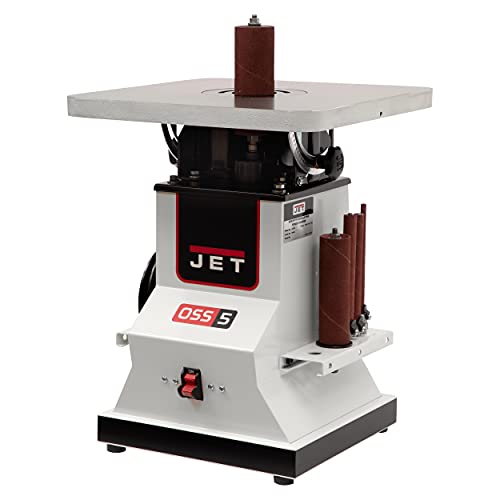
Spindle sander
spindle · Sleeve height not confirmed
JET's JBOS-5 is the benchtop 1/2-HP, 115V single-phase offer. Compare its supported work area and sleeve system with your projects before moving up to the separate JOSS-S floor model.
Check Amazon offer| Model | Family | Sleeve height (in) | Diameters (in) | Belt size | Table tilt | Offer |
|---|---|---|---|---|---|---|
| WEN 6524 | combo | 4.5 | 0.5, 0.75, 1, 1.5, 2 | 4 x 24 in. | 45° | Check Amazon offer |
| WEN 6510T | spindle | Not confirmed | 0.5, 0.75, 1, 1.5, 2, 3 | None documented | 0° | Check Amazon offer |
| JET JBOS-5 | spindle | Not confirmed | 0.25, 0.5, 0.625, 1.5, 2 | None documented | 45° | Check Amazon offer |
Browse all model guides or inspect the full product catalog.
A two-inch sleeve can still be the wrong height. Some machines use different lengths across their spindle range. A nominal metric label may also differ from an exact inch conversion.
Our size lookup keeps unconfirmed values visible and connects you to the model evidence. The separate sleeve catalog gives you listings to inspect; it does not silently declare them compatible.
Open the sleeve-size finderUseful before and after purchase
Shortlist documented spindle sanders by machine family, sleeve diameter and table-tilt requirement, with model guides and matched Amazon offers.
Look up documented sanding sleeve dimensions for exact machines, surface model-specific sleeve offers when supported and keep hardware fit separate.
Compare two documented spindle sanders side by side, including sleeve systems, table tilt, belt dimensions and source qualifications.
Add your machine quote, abrasives, support and dust connections to compare complete spindle sander setups using your own current prices.
Convert sanding sleeve diameter and height between inches and millimeters. Keep exact measurements visible without assuming nominal sizes are equivalent.
Compare abrasive packs by usable sleeve count and delivered cost. Account for mixed packs containing sizes or grits you will not use.
A spindle sander rotates a sanding sleeve around a vertical axis. On an oscillating machine, the abrasive also moves up and down, spreading contact along more of the sleeve. That motion supports curved-edge and template work, but it does not remove the need for a suitable abrasive, controlled feed and adequate support.
Choose around the surfaces you need to reach. Tight internal profiles call for a different diameter than broad sweeping curves. The table opening and insert must suit the selected drum, and the workpiece needs to remain supported throughout the movement. Check the exact manual rather than assuming every spindle uses the same washer or installation sequence.
A spindle-only machine focuses on this task. A combination machine adds another sanding surface and another setup process. A floor-standing machine may bring different working height and support requirements. Motor labels alone do not tell you which arrangement fits your room, stock or workload.
Compare combination and spindle-only machines, learn when this tool is useful, and check material limitations before treating one machine as a universal sander.
Look beyond the machine price
Extra sleeves, a stable support, dust connections and delivery can change the total. Check what the package includes before buying the same accessory twice. Compare complete setups using your own current quotes.
As an Amazon Associate I earn from qualifying purchases. How affiliate links work.
Check Amazon offerA mixed pack can look inexpensive per sleeve while containing diameters or grits your work does not need. Count the sleeves that suit both your machine and your projects, then compare the delivered cost. A cheap pack is not automatically economical if most of it stays on the shelf.
Our abrasive-cost calculator uses that usable count. It does not estimate service life or label one abrasive superior without evidence. The grit-selection guide explains how to assess the starting surface and finish requirements, while storage guidance helps keep dimensions and grits identifiable.
comparisons
Understand the difference between a vertical spindle sander for shaped edges and a conveyor drum sander for broad faces before choosing a workshop tool.
comparisons
Compare spindle and belt sanders for inside curves, straight edges, outside contours, and workshop workflow without assuming either replaces every sander.
comparisons
Compare spindle and disc sanders by inside-curve access, supported edge work, angle setup, and the woodworking tasks each machine is designed to handle.
comparisons
Understand why a spindle sander and drill press are different tools, and why sanding attachments require explicit approval from the exact drill-press manual.
comparisons
Compare a spindle sander with a router table for curve refinement, profiles, and repeatable work, with clear limits on sanding attachments and conversions.
comparisons
Learn what vertical oscillation adds to spindle sanding, how it differs from a non-oscillating abrasive, and why technique and machine approval still matter.
See every comparison · Explore brand families · Find a buying guide
Start with the question closest to your task. Some searches use “spindle” for a turned furniture part, and others refer to a drum sander or oscillating multitool. The answers distinguish those meanings before directing you to a guide.
A spindle sander uses a cylindrical abrasive sleeve above a support table to refine curved edges and accessible openings.
Read the detailed guideThe best choice depends on required radii, part size, extraction, accessories, and budget. Compare documented capabilities in the buying guide.
Read the detailed guideUse a spindle sander for supported curved-edge cleanup, especially inward curves, when an approved sleeve fits the work.
Read the detailed guideInterpreting spindle as a spindle sander, compare a current dated machine quote plus shipping, tax, sleeves, mounting, and extraction. Replacement shafts, CNC spindles, and stair spindles are different products.
Read the detailed guideCost varies by benchtop, combination, or floor model and market. Budget the complete setup using a dated quote for the exact kit.
Read the detailed guideInspect and mark the work, isolate power and install matched accessories, rehearse support, complete startup checks, sand in the prescribed direction, inspect, and shut down.
Read the detailed guideVerify the exact machine’s rotation arrow and manual. Feed against abrasive motion at the contact point as instructed; a universal left-to-right rule is misleading.
Read the detailed guideA rotating abrasive cylinder removes material from a supported edge. Oscillating models also move the sleeve vertically to spread contact.
Read the detailed guideUse a current quote for the exact model and accessories. Include installation, extraction, sleeves, shipping, and tax rather than comparing machine-only prices.
Read the detailed guideUse one when a supported curved edge needs refinement and the entire workpiece can follow a controlled path around a fitting approved sleeve.
Read the detailed guideIt refines curved edges, contours, and accessible cutouts while vertical sleeve travel spreads abrasive contact.
Read the detailed guideIt is a power sander with a cylindrical abrasive sleeve, usually standing vertically through a support table, for edge and curve refinement.
Read the detailed guideIts main jobs are cleaning up curved profiles and accessible internal openings after rough shaping, within the machine’s material and support limits.
Read the detailed guideIt is a spindle sander that moves its abrasive sleeve up and down while the sleeve rotates.
Read the detailed guideThere is no universal winner. Compare the machine’s documented capacity and accessories with your curves, workpiece dimensions, extraction, and budget.
Read the detailed guideIt is particularly good for refining accessible concave edges, and it also handles suitable outside curves and cutouts.
Read the detailed guideChoose an oscillating spindle sander when compatible curved-edge sanding is a recurring task and distributing contact along the sleeve is useful.
Read the detailed guideWeight depends on the exact machine and stand. A benchtop spindle sander and a conveyor drum sander are different machines; check the manufacturer’s net machine weight and do not confuse it with shipping weight.
Read the detailed guideFor broad board faces, compare conveyor drum sanders by working width, supported stock dimensions, extraction requirements and total installed cost. For concave edges, a spindle sander is usually the more relevant machine family.
Read the detailed guideFirst clarify the job: a conveyor drum sander sands board faces, while a vertical spindle sander refines curved edges. Choose the machine family before comparing models.
Read the detailed guideConsider a conveyor drum sander for repeated board-face sanding within its stock limits. Use a spindle sander for supported curved edges and suitable internal openings.
Read the detailed guidePrices vary by machine family, width, package and market. Compare current quotes for the exact model, then add shipping, tax, extraction and abrasives; spindle-sander prices are not a proxy for conveyor drum sanders.
Read the detailed guideA spindle sander refines supported curved edges and accessible openings. Its round abrasive sleeve is especially useful for concave curves.
Read the detailed guideFor turned stair spindles and balusters, shaped hand abrasives or an approved detail-sanding attachment may suit the profile. A stationary spindle sander is named for its abrasive shaft, not for sanding every turned spindle.
Read the detailed guideMatch the abrasive and support method to the turned profile, preserve sharp details and use light controlled passes. Hand sanding can reach profiles that a flat power-sanding pad cannot follow.
Read the detailed guideNeither is universally better. Simple orbital, random-orbit and forced-rotation sanders have different pad motions; choose for the surface, removal rate and finish requirements.
Read the detailed guideIt sands curved edges and accessible cutouts while moving the rotating sleeve vertically to distribute abrasive contact.
Read the detailed guideChoose by required curve radii, supported workpiece dimensions, sleeve availability, dust connections and budget. The buying guide compares machine families and documented models without claiming a universal winner.
Read the detailed guideIf you mean furniture or stair spindles, choose a method that follows the turned profile, often hand abrasives or a suitable detail attachment. If you mean a spindle-sanding machine, compare its documented capacity with the curved edges you make.
Read the detailed guideYes, when the tool manufacturer approves the sanding pad or profile attachment and abrasive for that tool and material. A multitool and an oscillating spindle sander use different motions and accessories.
Read the detailed guideThey are especially useful for refining inward curves and accessible cutouts after rough shaping, provided the work can be supported and controlled.
Read the detailed guideA conveyor drum sander can refine broad faces with a suitable abrasive sequence, but its scratch pattern may still require final sanding for the chosen finish. A spindle sander primarily refines edges rather than broad faces.
Read the detailed guideRotation can slow with excess pressure, pad braking or other model-specific conditions. Unplug the tool before inspection and follow its manual; persistent abnormal operation calls for the manufacturer’s troubleshooting or service guidance.
Read the detailed guideIts purpose is controlled curved-edge sanding. Vertical oscillation spreads contact along the rotating sleeve rather than keeping the work against a single band of abrasive.
Read the detailed guideA simple orbital pad moves in small orbits without necessarily rotating; a random-orbit pad also rotates, and forced-rotation models drive that rotation. Identify the mechanism before diagnosing normal motion.
Read the detailed guideJohn Morris publishes SpindleSander.net using manufacturer documentation and clearly qualified model comparisons. Our guides do not claim hands-on testing. Exact-model offers are separated from alternatives, and uncertain dimensions stay unknown until the evidence supports them.
Read how we research machines and accessories, visit the workshop guide collection, or learn about the publication.