accessories
Storing Sanding Sleeves and Keeping Refill Records
Store sanding sleeves so their model and grit labels stay readable and their cylinders keep their shape. A cylinder that loses its packaging can be difficult to reorder accurately; one crushed under spare hardware may no longer be suitable for use. Build storage around the accessory families you own and the environment recommended by the abrasive manufacturer. Choose organizers, labels and stock-rotation habits that make both the next sleeve and its replacement order easy to identify.
As an Amazon Associate I earn from qualifying purchases. How affiliate links work.
 18 Pack Spindle Sander Sleeves, Sanding Sleeves for Oscillating Sander, 80 150 240 Assorted Grit Sandpaper, 4-1/2" Length, 1/2",3/4",1",1-1/2", 2", 3" DiameterCheck Amazon offer
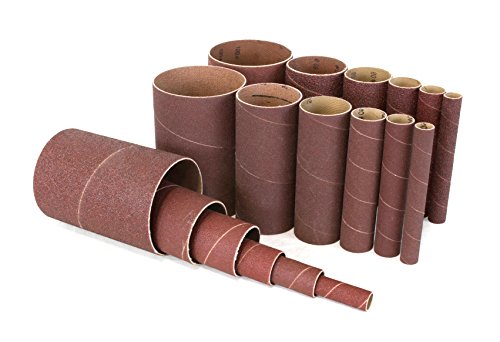 WEN 6510SPC Assorted Grits Spindle Sanding Sleeves (18 Pack)Check Amazon offer
Choose compartments that preserve the cylinder
Compare drawer dividers, individual boxes, and purpose-made organizers by whether they keep sleeves from being crushed or mixed with heavy parts. A container's external capacity says little about how well it supports the actual diameters you stock. Allow enough space to remove a sleeve without pulling on its edge or forcing neighboring items aside. Keep metal washers, nuts, and spare tools in separate compartments. If choosing a dowel-style rack, do not assume a tight fit is desirable; the organizer should store the abrasive rather than stretch or distort it. Use the abrasive maker's packaging and handling instructions as the reference when deciding whether a particular organizer is appropriate.
Put machine identity before grit color
Label each group with the compatible machine or accessory system, then diameter, height where documented, grit, and supplier SKU. Color coding can supplement the labels but should not replace the actual information. Two machines may share a nominal diameter while requiring different sleeve heights or support systems. Keep portable-tool refills in a distinct family from benchtop refills until compatibility has been verified. A photograph of the original package is a useful backup when labels fade or containers change. Do not write a calculated metric conversion as if it were a manufacturer fit specification. Preserve the original dimensions and any supplier confirmation that established the replacement relationship.
Follow the abrasive supplier's environment guidance
Storage recommendations can depend on the backing and bonded construction, so use the supplier's instructions for the product in your shop. Red Label Abrasives discusses controlled storage conditions and the effects of moisture and temperature on abrasive products. Red Label storage guidance. That supports paying attention to the storage environment; it does not justify inventing one universal humidity setting for every sleeve. Avoid placing consumable stock where it is exposed to leaks, direct weather, or the heat of nearby equipment. If the shop has seasonal extremes, ask the abrasive manufacturer how its particular product should be stored rather than applying an unrelated belt specification to all sleeves.
Separate new, usable, uncertain, and damaged stock
Keep unopened refills together with their labels. Used sleeves can have their own identified compartments when they remain suitable under the manufacturer's inspection guidance. Anything torn, distorted, contaminated, or otherwise questionable should be separated while its status is resolved, rather than mixed back into the ready supply. A box labelled miscellaneous becomes risky when nobody can tell whether it contains useful spares or discarded consumables. Record the reason an item was set aside so the next person does not repeat the investigation. This is an inventory system, not a method for restoring damaged abrasive. A tidy drawer should make the condition of each group clearer, not merely hide it from view.
Set reorder points from observed consumption
Track which diameter-and-grit combinations are used most often, then keep a modest reserve that reflects your own lead times and workload. Avoid assigning the same minimum quantity to every sleeve size simply because a mixed pack once supplied them equally. Store receipts or order confirmations with the accessory record, noting changes in SKU or product construction. Review old stock before buying another assortment so duplicate uncommon sizes do not accumulate unnoticed. If sharing the machine, leave an easy way to mark the last sleeve taken from a compartment. Use those consumption notes to order compatible refills before the next project exhausts a frequently used size.
Review labels when reorganizing a drawer instead of transferring anonymous contents into nicer bins. A storage upgrade is a useful opportunity to resolve uncertain sizes and remove duplicate purchasing records that refer to the same verified refill.
Questions about Storing Sanding Sleeves and Keeping Refill Records
Should sleeves and metal hardware share a drawer?
Use separate compartments so hardware cannot crush or damage abrasive cylinders and their labels remain clear.
Is there one humidity setting for all abrasives?
Follow the specific abrasive supplier’s storage guidance; do not generalize a number from another product.
What belongs on a sleeve-storage label?
Machine or accessory system, documented dimensions, grit, supplier SKU, and any compatibility notes needed for reordering.

