accessories
Stands and Carts for Benchtop Spindle Sanders
A stand or cart should make the sander easier to position and support, while preserving the mounting arrangement required by the machine. Load capacity is only one screening criterion. The footprint, mounting surface, working height, wheel arrangement, and room for accessories all affect the purchase. Begin with the machine's mounting instructions and the way it will be used, then evaluate a stationary stand, a cabinet, or a compatible mobile base.
As an Amazon Associate I earn from qualifying purchases. How affiliate links work.
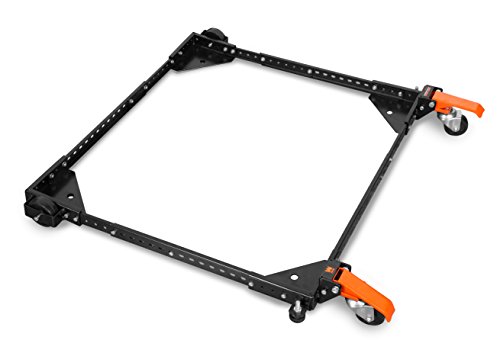 WEN Mobile Base, Universal Heavy Duty, 500-Pound Capacity for Tools and Machines (MB500)Check Amazon offer
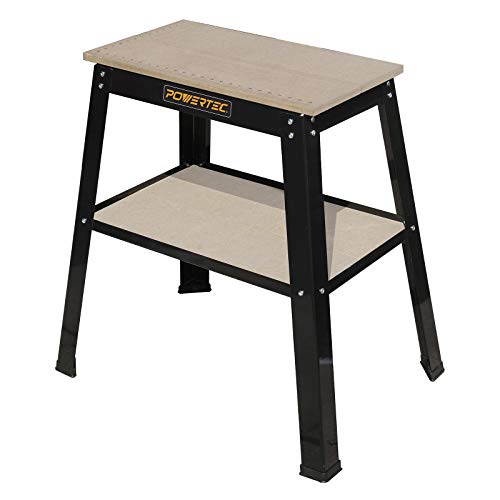
 POWERTEC Flip Top Tool Stand with Caster Wheels - Mobile Workbench with 300lb Capacity, for Benchtop Power Tools, Heavy Duty (UT1012), Alloy SteelCheck Amazon offer
Start with the machine mounting requirements
Find the mounting section of the exact sander manual and record the base footprint, mounting locations, and any specified fastening arrangement. The available tabletop must support the machine as intended, with room for the required fasteners and access to controls. Do not assume a narrow tool stand is suitable simply because its advertised load rating exceeds the machine weight. Check whether the top is supplied, whether a mounting board is permitted or required, and whether its thickness affects the intended fastening. For a cabinet you already own, inspect its construction and ask its maker about the proposed stationary machine load rather than borrowing a rating from a different cabinet in the same range.
Interpret capacity as a limit, not a stability guarantee
A stand's capacity describes a stated load limit under its manufacturer's conditions; it does not certify every machine arrangement placed on it. BORA's universal mobile base kit is an example of a product with a published capacity and defined assembly requirements. BORA mobile base kit. The combined load includes the machine, cabinet or platform, stored accessories, and any other items the base supports. Also examine the footprint and center of the supported load. A tall narrow cabinet can behave differently from a low wide one even at the same total weight. Treat capacity, physical fit, and stability as separate questions during the comparison.
Choose working height around the complete setup
The useful height is the sanding table's height above the floor after the sander, stand, mounting top, and any mobile base are combined. A stand specification alone omits the machine's own height. Consider the workpiece sizes you expect to handle and whether the final arrangement gives comfortable access to the table and controls. If several people share the machine, an adjustable stand can be worth comparing, provided it locks and supports the tool in accordance with its instructions. Before buying, mock up the proposed table height using measurements rather than operating the sander on a temporary stack. The point is to evaluate reach and clearance without substituting an improvised support arrangement.
Decide whether movement is occasional or routine
For occasional repositioning, a mobile base beneath a suitable stand may be enough. A purpose-built cart can be more convenient when the machine travels between a storage position and an open workspace frequently. Compare the wheel and locking arrangement, threshold clearance, and space needed to turn the assembly. BORA's PM-3550 description identifies a four-swivel-wheel layout, showing that mobility hardware varies even among bases from one manufacturer. BORA PM-3550 overview. That product example is not a recommendation for every spindle sander. Check the required stationary operating configuration and avoid assuming that locking one wheel makes an arbitrary cart an approved machine stand.
Reserve space for accessories and connections
Useful storage keeps sleeves, drums, throat plates, and hardware accessible without crowding the work surface. Drawers or shallow labelled compartments can preserve component identity, but their loaded weight belongs in the total capacity calculation. Plan space for the dust hose connection and power cord so the cart can reach its intended position without pulling them tight. Leave the controls and required ventilation openings accessible. When comparing costs, include mounting hardware, a required top, a mobile base, and storage fittings that are sold separately. Compare the total for the frame, top, mounting hardware, base and storage fittings; the least expensive bare frame may need several purchases before it can support the sander.
Check the path between storage and use, including doorways and nearby equipment. A cart that fits the parking space may still be difficult to maneuver when the full machine footprint and hose connector are included.
Questions about Stands and Carts for Benchtop Spindle Sanders
Is a high load rating enough to choose a stand?
No. Mounting, footprint, stability, working height, and the manufacturer’s operating requirements also matter.
What weight counts toward a mobile base limit?
Include everything supported by the base, such as the machine, cabinet, mounting top, and stored accessories.
Should I compare stand height or sanding-table height?
Compare the final sanding-table height after all components of the setup are included.