accessories
Buying Sanding Sleeve Grits for Your Work
The best grit assortment is the one that supports your actual shaping and finishing work without filling a drawer with unused sleeves. Start with the condition of the stock and the finish manufacturer's preparation requirements. Then choose compatible abrasives that let you remove existing marks and refine the result. Grit numbers are useful purchasing labels, but they do not prescribe a universal spindle-sander sequence or machine setting.
As an Amazon Associate I earn from qualifying purchases. How affiliate links work.
 18 Pack Spindle Sander Sleeves, Sanding Sleeves for Oscillating Sander, 80 150 240 Assorted Grit Sandpaper, 4-1/2" Length, 1/2",3/4",1",1-1/2", 2", 3" DiameterCheck Amazon offer
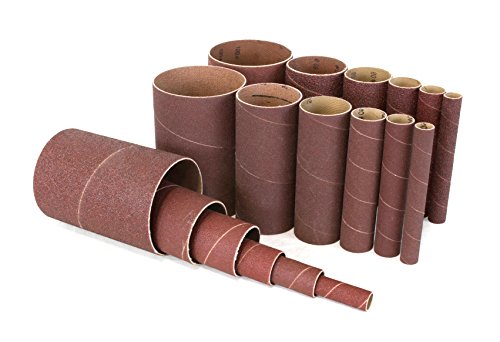 WEN 6510SPC Assorted Grits Spindle Sanding Sleeves (18 Pack)Check Amazon offer
Buy for the starting surface
List the surfaces that arrive at your sander: a carefully sawn curve, a rough cut with substantial marks, or an already refined edge needing a small correction. Those are different purchasing needs. Buying only fine sleeves because the finished surface should feel smooth can leave a gap at the preparation stage. Buying only coarse sleeves creates the opposite gap when visible scratches need refinement. Use a representative offcut from the intended project to evaluate the assortment after compatibility is established. Record the incoming surface and desired result alongside the abrasive label. That note is more informative for the next order than a statement that one grit is your favorite.
Treat finishing guidance as application-specific
Norton's bare-wood guidance distinguishes wood groups and water-based versus oil-based stains when discussing final sanding. That distinction demonstrates why a finish target cannot be reduced to one universal grit number. Norton bare wood sanding. Consult the coating manufacturer's own instructions for the product you will apply, and evaluate the prepared offcut with that finish. A spindle sander may complete only one stage of the preparation; the final edge may still need an appropriate subsequent process. When buying sleeves, budget for the abrasive stage the machine actually performs rather than assuming the finest available sleeve necessarily produces the preferred finished appearance.
Understand what a mixed pack does and does not solve
A mixed pack can make sense when establishing a starting inventory, but read the diameter-by-grit breakdown. A pack may contain many cylinders while offering only a single example of the diameter and grit used most often. Conversely, a one-grit assortment across many diameters may be excellent for maintaining an established workflow and poor for experimenting with a new one. WEN offers a model-specific combination belt-and-sleeve pack in 120 grit, illustrating why the words combination and assortment need their accompanying content list. WEN 6524SP120. Make the purchasing comparison at the individual size-and-grit level, not merely by total pieces in the package.
Keep abrasive labels visible during evaluation
Save the actual printed grit designation, including any prefix, with the supplier and product line. Do not erase labeling distinctions by transferring every cylinder into an unmarked drawer. If comparing two products, use otherwise comparable stock and the same intended result; changing several variables at once makes the observation less useful. A worn abrasive is also a poor reference for judging a fresh product's aggressiveness. Use those shop notes to choose reorders for comparable work. One sleeve or an unusual piece of wood cannot establish that a brand lasts longer; a comparative performance claim would need controlled testing.
Replenish the gaps your projects reveal
After several projects, review which diameter-and-grit combinations run out first and which remain untouched. Reorder the frequent combinations individually where available, keeping a smaller reserve for uncommon work. If the next project changes wood, geometry, or coating, reconsider the assortment before placing a large order. Norton's broader sandpaper selection guidance also organizes recommendations by application, reinforcing that the job should lead the choice. Norton sandpaper guide. Keep machine speed and permitted material decisions in the tool manual; an abrasive shopping guide does not establish those settings. Your buying record should finish with a clear purpose for each grit and enough information to replace it accurately.
Keep a finished reference offcut when appearance matters. Label it with the abrasive preparation and coating used, so future purchases support a known project result instead of relying on memory of how an unfinished edge felt.
Questions about Buying Sanding Sleeve Grits for Your Work
What grit should every spindle sander use?
There is no single universal choice. Stock condition, intended result, abrasive product, and finish instructions determine the useful assortment.
Is the finest sleeve always best before stain?
No. Follow the coating instructions and evaluate a representative finished sample.
Are mixed packs better value?
Only when their diameter-and-grit distribution matches the combinations you will actually use.

