buying guides
Spindle Sanders in Australia: Buying for Your Workshop
For an Australian spindle sander purchase, check the regional machine version and the journey to your workshop together. Carbatec's benchtop spindle documentation gives a local reference point; an overseas review does not establish the supplied accessories, electrical requirements, freight terms or support for an Australian offer. Use those details to compare suitable machines. This guide does not claim live nationwide availability, apply overseas prices to local purchases or rank models from unperformed tests.
As an Amazon Associate I earn from qualifying purchases. How affiliate links work.
US-market reference offers only: these Amazon.com listings are not verified Australian offers. Do not assume Australian voltage, plug, delivery, warranty or parts support. Use the Australian manufacturer sources below to confirm the exact regional machine before ordering.
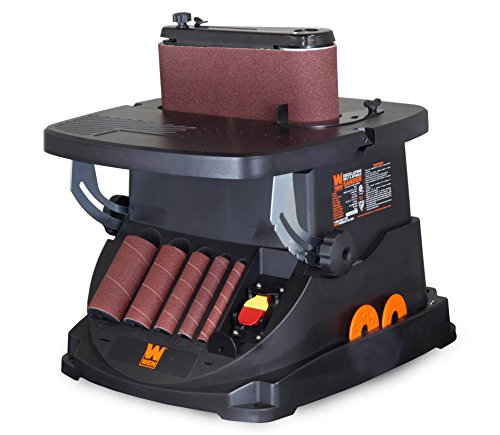 WEN 6524 Oscillating Belt and Spindle SanderCheck Amazon offer
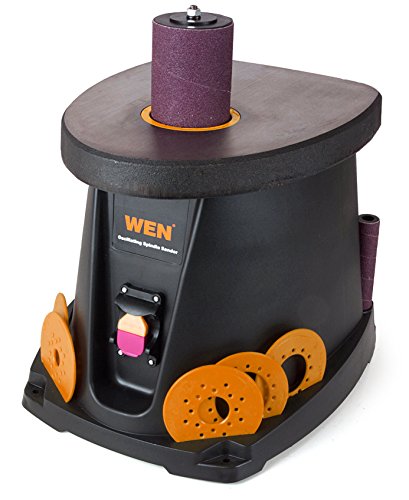 WEN 6510T 3.5 Amp Oscillating Spindle Sander,BlackCheck Amazon offer
Establish the machine category first
A spindle sander is intended for curved-edge work around a vertical abrasive surface. A belt-and-spindle combination adds another edge-sanding format, while a conveyor drum machine addresses broad faces. Carbatec's sanding collection lists these as different kinds of equipment, which is useful when search results contain the word drum in several contexts. Specify the actual task in your shortlist: internal curves, external contours, straight edges, or panel faces. Choosing the correct category prevents a seemingly attractive machine from arriving with no practical way to perform the operation you bought it for.
Use local product documentation as an anchor
Carbatec describes its benchtop oscillating spindle sander as a 375-watt machine with an 85-millimetre sanding height and interchangeable spindles. Those published details provide a concrete starting point for checking whether a benchtop format fits your work. They do not establish the specifications of every Carbatec or Triton listing. Keep the exact model identifier and regional manual attached to your notes. If a dealer uses a shortened name, ask for the complete product reference before comparing it with overseas information or ordering a set of replacement accessories.
Make freight a practical question
A purchase that looks simple on a product page can involve a substantial journey to a regional workshop. Ask for delivery conditions to the actual postcode and establish whether the quoted service reaches a residence, business, depot, or another handover point. Confirm the package size and weight for the offered machine, then plan unloading and the route to its working location. Do not borrow an estimate from a different model. For larger equipment, the cost and feasibility of handling can materially affect the decision, even when two machines appear similar on their specification sheets.
Verify the regional version and service route
Before treating an imported model as an alternative, confirm its electrical requirements and the documentation for the machine that would actually be supplied. Similar appearance or a shared model family does not prove that a foreign listing is suitable for the local installation. Ask who handles service and how a repair would be arranged from your location. A nearby counter is useful only if it supports that exact product. Where an older or imported machine creates electrical uncertainty, obtain qualified advice instead of treating a cord adapter as a complete solution.
Investigate abrasive supply before buying bulk
Carbatec publishes separate sleeve products naming the Triton TSPST450 and TSPSP650, illustrating why the complete model matters even within one brand. A package intended for a portable sander should not be assumed to serve a belt-and-spindle machine. Record diameter, length, grit, and the associated drum or insert requirements for your chosen tool. If your work depends heavily on one diameter, investigate replacement quantities for that size rather than accumulating assorted packs full of seldom-used sleeves. Consumable planning makes the station easier to keep working between larger tool orders.
Choose the format that earns its space
A dedicated bench spindle station can suit manageable curved parts; a combination merits consideration when straight-edge sanding recurs; a portable format deserves investigation when moving a large component around a table is the central problem. Test these ideas with representative parts and a sketch of the working area. Include extraction, storage for loose accessories, and comfortable operator access. Then compare exact Australian offers that meet the requirements and verify their current terms. This produces a practical purchase decision while keeping manufacturer design information separate from seller inventory, freight promises, and unverified performance claims.
Questions about Spindle Sanders in Australia: Buying for Your Workshop
Should Australian buyers use overseas prices as a budget?
No. Compare actual local offers and delivered costs for the required regional version, including necessary accessories and handling.
Are all Triton sanding sleeves interchangeable?
No. Carbatec lists model-specific sleeve sets. Verify dimensions and compatibility for the exact tool.
What should I check for regional delivery?
Confirm the postcode quote, handover point, package dimensions, unloading requirements, and route into the workshop before committing.