comparisons
Spindle Sander vs Router Table: Sanding or Cutting?
A spindle sander removes material with an abrasive sleeve. A router table supports a router and cutting bit for approved routing operations. They can appear in the same project, but they are not substitutes simply because a rotating tool protrudes through a table. Choose a spindle for abrasive edge refinement and a router setup for the cutting operation it is designed to perform. Do not improvise sanding conversions.
As an Amazon Associate I earn from qualifying purchases. How affiliate links work.
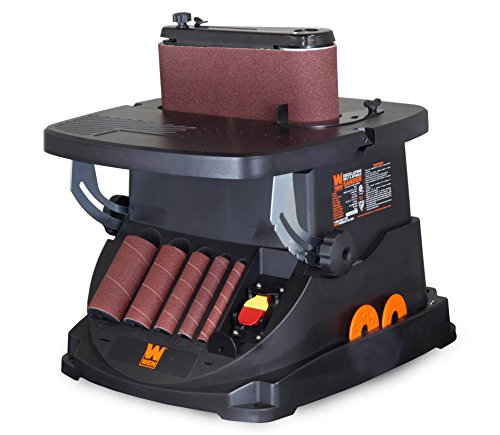 WEN 6524 Oscillating Belt and Spindle SanderCheck Amazon offer
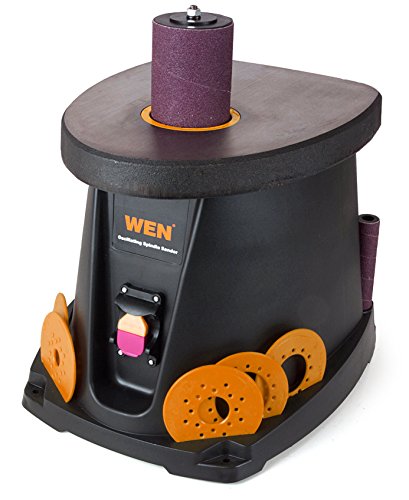 WEN 6510T 3.5 Amp Oscillating Spindle Sander,BlackCheck Amazon offer
Compare the approaches
| Decision | First option | Second option |
|---|---|---|
| Material removal | Abrasive sleeve | Cutting bit in a compatible router |
| Primary decision | Refine a shaped edge | Make a specified profile or guided cut |
| Repetition | Operator follows and checks the outline | Approved guides can define the cut |
| Conversion policy | Use documented sander accessories | No assumed permission for sanding conversion |
Separate surface refinement from a defined cut
The spindle allows the operator to gradually refine an outline while preserving the intended reference by inspection. A router bit has a cutting geometry selected for a particular operation, such as an approved edge profile or guided cut. The router's outcome depends on its bit, guides, workholding, and setup. Sanding cannot automatically reproduce that cutting geometry. Conversely, routing does not necessarily remove every scratch or leave a surface ready for finish. Knowing which stage is needed prevents buying the wrong station to solve a finishing problem.
Understand what the table contributes
Bosch's RA1181 is a documented router table with a mounting plate, fence, and related support provisions. It is a platform for compatible routing equipment, not a motorized spindle sander. A dedicated spindle machine has its own sleeve mounting and table-opening system. These components are designed around different contact and loading conditions. Compare complete setups, including the router where required, rather than comparing the price of a bare router table with the price of an assembled sanding machine.
Match repeated shapes to the appropriate method
A batch of identical curved parts may benefit from a properly designed and approved template-routing process, followed by suitable surface refinement. The spindle can help prepare a template or smooth a finished edge, but it does not automatically trace the template. Do not assume a sanding sleeve may be fitted with an improvised bearing or guide to reproduce routing behavior. If precise duplication is the goal, evaluate a documented cutting process and its required skill, support, and safeguards separately from the sanding purchase.
Keep rotational speed and accessories within approval
A router's collet accepting an accessory shank does not establish that the accessory, speed range, or operating arrangement is suitable. Sanding sleeves and drums have their own limits, and a router-table conversion requires explicit approval from the relevant manufacturers. Do not reduce the issue to choosing a low dial setting or building a plate. This comparison recommends no conversion. If a proposed sanding arrangement is absent from the exact documentation, use a purpose-built sander or obtain clear manufacturer guidance before considering it.
Plan the order of operations around references
A well-planned part retains the surfaces needed to support and guide each operation. Sanding a critical reference too early can change how the part later sits against a fence or template. Routing an edge profile before the surrounding shape is correct can make later correction awkward. Map the work from rough cutting through approved shaping to final surface preparation. Keep enough material for controlled refinement without expecting sanding to repair a substantially wrong cut. The tools contribute to different stages of that sequence.
Choose by the missing capability in your shop
If you need profiles, joinery, or other specified routing operations, investigate an appropriate router and table combination. If your immediate frustration is rough concave edges after sawing, a spindle machine addresses that problem more directly. Owning both may be justified for furniture and template work, but each requires its own setup and operating knowledge. Compare approved capability, project frequency, and complete station cost. A machine with a table and a rotating center should never be treated as a universal platform for whichever accessory happens to fit.
A curved template shows where the two stations meet in a workflow. Refine its outline at the spindle, inspect whether the curve is fair, then move to the separately documented routing setup it will guide. The sleeve does not follow the template as a guided router bit would, and an opening in a router-table plate does not establish an approved sanding configuration. Keep the template inspection between those two operations.
Questions about Spindle Sander vs Router Table: Sanding or Cutting?
Can a router table replace a spindle sander?
It performs different work. Do not install sanding equipment unless the exact router, table, and accessory manufacturers explicitly approve the complete configuration. A spindle sander is the direct category for abrasive curved-edge work.
Which tool makes repeated curves more consistent?
A properly designed, approved guided routing process can define a repeatable cut. A spindle sander relies on operator control and inspection; it does not automatically duplicate a template.
Should sanding happen before or after routing?
It depends on which reference surfaces each stage needs. Plan the sequence to preserve support and dimensions, and follow the instructions for the specific routing and sanding operations.