buying guides
Choose a Spindle Sander for Your Woodworking Projects
A project list is a better spindle-sander shopping tool than a long column of motor specifications. Curved shelf brackets, wooden signs, furniture parts, and templates may all use a spindle, yet they place different demands on radius, height, and support. Sort your projects by the geometry that must be sanded. Then choose the capabilities that appear repeatedly across the work you actually plan to build.
As an Amazon Associate I earn from qualifying purchases. How affiliate links work.
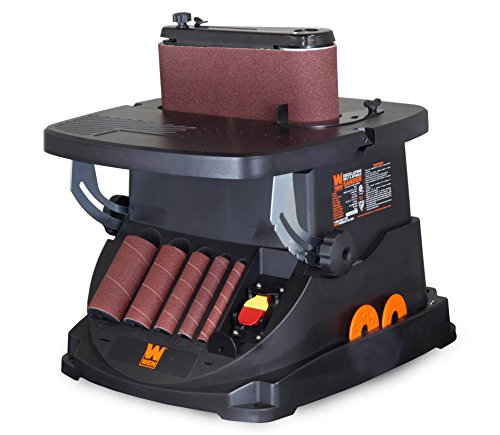 WEN 6524 Oscillating Belt and Spindle SanderCheck Amazon offer
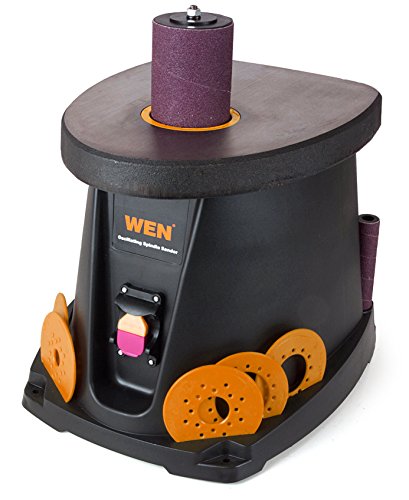 WEN 6510T 3.5 Amp Oscillating Spindle Sander,BlackCheck Amazon offer
Brackets and curved decorative edges
Brackets often combine a concave decorative edge with straight mounting surfaces. The tightest inside curve controls which drum sizes can enter the shape, while the overall blank determines table support. A spindle-only machine may handle the curve well, with another method reserved for straight edges. A combo becomes relevant if both stages regularly pass through one sanding station. Preserve the mounting geometry: making the decorative edge smooth is not a reason to round a reference surface or alter a critical fitting dimension.
Templates that guide later operations
A template deserves particular attention because an irregularity can be transferred to every later part made from it. A spindle sander can refine the perimeter, but its abrasive does not follow a reference automatically. Inspect the curve visually and with the intended mating reference, removing high spots carefully. Allow time for suitable hand tools and final hand sanding. If the template is used for routing, its preparation and the subsequent routing setup are separate operations with their own documentation and workholding requirements.
Furniture parts with substantial edge height
For chair components or thick decorative rails, compare the part's edge height with the manufacturer's usable sanding capacity. Sleeve length alone is not enough because the spindle moves relative to the table. Check whether the complete edge can be worked as intended without unsupported lifting or an improvised riser. Table area and any required external support become increasingly important as the part grows. A heavier benchtop machine such as a RIKON 50-300 may deserve inspection, but suitability still depends on the exact component and approved setup.
Signs and interior openings
A spindle can enter some interior openings, but the opening must provide adequate clearance and permit a controlled feed path. The smallest visible hole is not necessarily the only constraint; a surrounding panel may interfere with the machine or trap the operator into awkward movement. For very large secured workpieces, a purpose-built portable spindle tool can be another category to examine. A closed opening is not permission to force a part around a drum when support or hand clearance becomes inadequate.
Beveled edges and matched components
If the design includes a bevel on a curve, table adjustment becomes a practical requirement rather than an optional feature. WEN AT6535 and RIKON 50-300 provide examples of documented tilting-table spindle machines. Read how the angle is established and which insert arrangement is required. For matching left and right parts, keep orientation and reference faces clear in your notes. A table scale can speed setup, but the finished component should still be checked against the intended angle and fit.
Translate the project list into a purchase
Create one line for each recurring project and record the minimum curve radius, edge height, largest overall size, and need for straight or beveled sanding. Mark any operation outside a candidate's approved scope. A machine that covers all frequent requirements with straightforward changes is usually a stronger choice than one selected for a rare imagined task. Keep the workflow balanced: close rough cutting, careful layout, appropriate machine sanding, and final inspection each contribute. The sander improves one stage rather than replacing the judgment needed throughout the build.
Give the curved sign, thick furniture rail and small decorative bracket separate rows on the project list. The sign may set operating clearance, the rail may set supported sanding height, and the bracket may set the smallest usable sleeve. Carry all three requirements into the shortlist. If only one rare component needs a substantially different machine, investigate an appropriate alternative process for that component before making it dictate the whole purchase.
Questions about Choose a Spindle Sander for Your Woodworking Projects
What projects benefit most from a spindle sander?
Projects with repeated concave edges are the clearest fit: brackets, shaped templates, curved furniture parts, and certain sign openings. Check that each part can be safely supported and controlled.
Can a spindle sander make identical parts by itself?
No. It does not automatically trace a template or enforce a dimension. Use suitable references, inspect the geometry, and choose a separately appropriate method when exact duplication is required.
Should I buy the smallest drum possible for detailed work?
Only if the machine approves it and the work can be controlled. Very small contact areas do not solve poor support, trapped openings, or parts too small to hold safely.