comparisons
Combo vs Spindle-Only Sander: Which Station Fits?
Choose a dedicated spindle sander when concave edges dominate, a belt station already exists, or leaving one sleeve setup ready is valuable. Choose a belt-and-spindle combo when both abrasive shapes solve recurring work, one footprint matters, and straight-edge and curve stages can be batched. Neither format is automatically more accurate: compare the actual table, sleeve range, belt length, changeover sequence and workpiece support for your projects.
As an Amazon Associate I earn from qualifying purchases. How affiliate links work.
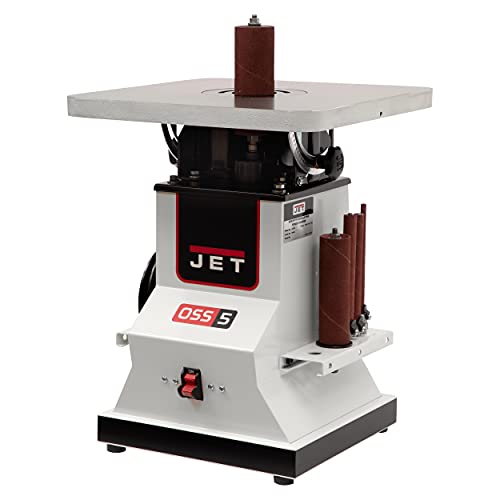
The WEN 6524 is the exact belt-and-spindle example; WEN 6510T and JET JBOS-5 are exact dedicated spindle alternatives. They represent different formats, not interchangeable packages or universal winners.
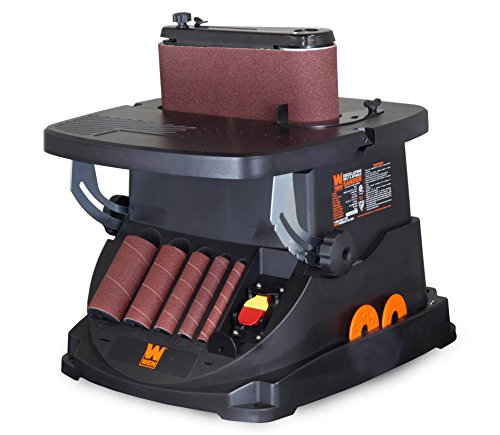 WEN 6524 Oscillating Belt and Spindle SanderCheck Amazon offer
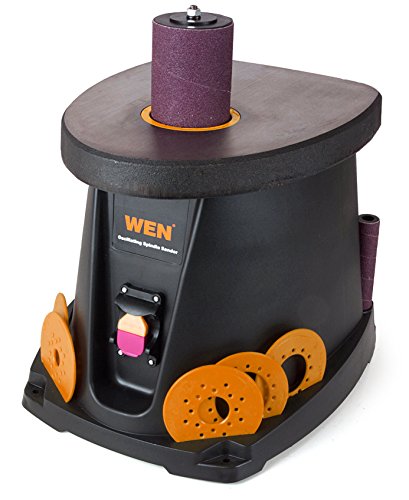 WEN 6510T 3.5 Amp Oscillating Spindle Sander,BlackCheck Amazon offer
Compare the approaches
| Decision | First option | Second option |
|---|---|---|
| Exact examples | WEN 6524 combo | WEN 6510T dedicated spindle |
| Abrasive systems | 4 × 24-in. belt plus five 4-1/2-in.-high sleeve sizes | Six documented sleeve diameters; no belt attachment |
| Largest included diameter | 2 in. | 3 in. |
| Table record | 0–45° | Fixed; compare AT6535 for a dedicated tilting table |
| Readiness tradeoff | One footprint; convert and store the unused assembly | Sleeve station remains ready; separate belt work elsewhere |
| Choose this when | Both edge geometries recur and stages can be batched | Curves dominate or another tool already handles belt work |
Count operations rather than advertised functions
List the sanding stages for a representative project. A decorative bracket may need both straight-edge cleanup and concave refinement. A batch of scroll-sawn shapes may only need the spindle. A furniture shop with an established belt station may gain little from another belt attachment. This count gives each feature an actual purpose. A function that never replaces another operation contributes less value than it appears to in a side-by-side product table, even when it comes bundled at an attractive price.
Compare genuine category examples
WEN 6524 is a documented combo with a 4-by-24-inch belt, five 4-1/2-inch-high sleeve sizes through 2 inches and a table range to 45 degrees. WEN 6510T is a fixed-table spindle-only example with six diameters through 3 inches, while AT6535 shows that a dedicated spindle model can also provide a 0–45-degree table. Those are different project choices, not a simple feature ladder: the combo adds a belt but omits the 6510T's documented 3-inch diameter, and table tilt does not belong exclusively to either category.
Calculate the effect of repeated conversion
Conversion matters most when the sequence constantly alternates. A six-part bracket batch can complete every supported belt edge, disconnect power, change to the correct sleeve/insert/washer arrangement, and then process every concave section. A one-off fitted part may demand repeated moves after each trial fit. Count those moves instead of guessing from the words tool-free. Also identify where the removed belt assembly or unused drums will sit; losing one washer or insert can make the next setup unusable even when the main attachment is present.
Look closely at support near the abrasive
A dedicated machine may arrange its table differently from a combo, but category labels do not prove stiffness, accuracy or usable support. Map the full part, not just its edge: mark the reference face, the section beside the abrasive, the off-table overhang and the arc the piece must sweep. Then compare table area, insert clearance, adjustment locks and hose routing in the exact configuration. A 45-degree specification is not enough if the required face cannot stay supported through the pass, and a compact base is not enough if a long blank collides with a wall or neighboring tool.
Include storage and consumables in the value calculation
A combo needs sanding belts and model-specific sleeves, drums, inserts and washers; its unused assembly also needs protected storage. A spindle-only machine removes the sanding-belt inventory but still needs the complete sleeve system. Record belt width and loop length together and sleeve diameter and abrasive height separately. A 4-by-24-inch belt listing does not certify the spindle parts, and a nominal metric/inch label does not certify fit. Compare only the consumables and stations your recurring project list actually requires.
Make the decision around readiness
Choose the combo when both modes solve recurring tasks, one footprint is advantageous, and the work can tolerate or batch the changes. Choose spindle-only when curves dominate, a separate station already handles straight work, or keeping one spindle setup ready matters more. If beveling is required, compare that feature within both categories instead of treating it as a reason for one category alone. A well-chosen station fits your habits and parts with few unnecessary adjustments, which is a clearer benefit than claiming universal superiority for either design.
Write out one evening's sanding sequence before choosing the format. Curved templates may let you leave one drum installed from session to session; mixed brackets may require repeated moves between belt and sleeve. Count those conversions and mark where each unused assembly will sit. Include that storage in the footprint comparison, because both machines can appear equally compact when only their bases are measured.
Questions about Combo vs Spindle-Only Sander: Which Station Fits?
Is a combo always cheaper than buying separate machines?
Not necessarily. Compare the current complete setup cost and whether a separate tool is actually needed. An unused second function does not automatically represent a saving.
Does spindle-only mean no beveling table?
No. Some dedicated spindle machines have tilting tables. Check the exact model rather than using the number of sanding modes to infer table adjustment.
What makes a dedicated spindle station appealing?
It can remain ready for recurring curved-edge work without changing to a belt assembly. That benefit is most relevant when curves dominate or another machine already covers straight-edge sanding.