buying guides
Spindle Sanders for Small Shops: Plan the Whole Station
In a small shop, choose the machine format before comparing footprints. A compact fixed-table sander can be stored, a heavier benchtop model can earn a permanent station, a belt-and-spindle combination can replace a second machine, and a portable/clamped format moves to suitable supported work. Each option still needs a safe working envelope, extraction route, accessories and repeatable setup; the smallest base is not automatically the smallest usable station.
As an Amazon Associate I earn from qualifying purchases. How affiliate links work.
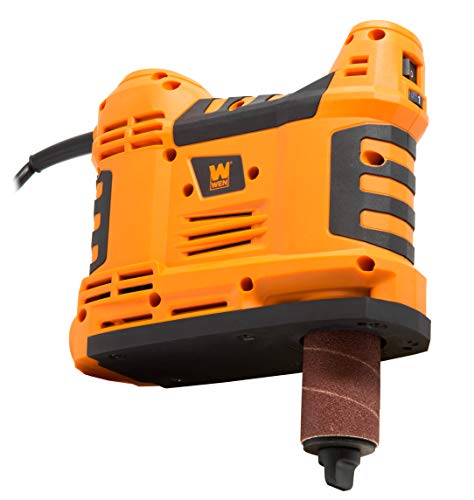
The retained offers are exact WEN 6510T, 6524 and HA5932 models representing fixed-table, combination and portable/clamped formats. RIKON 50-320 is source-only with no exact retained Amazon offer. A compact listing does not certify your bench, cart or mounting arrangement.
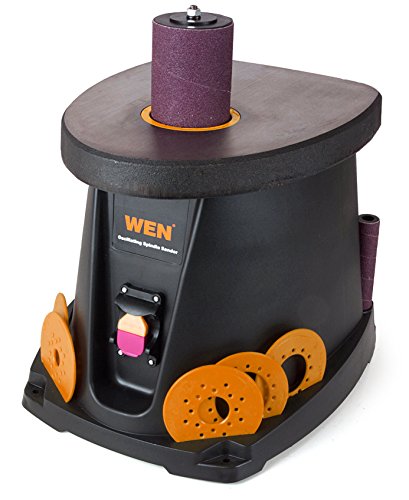 WEN 6510T 3.5 Amp Oscillating Spindle Sander,BlackCheck Amazon offer
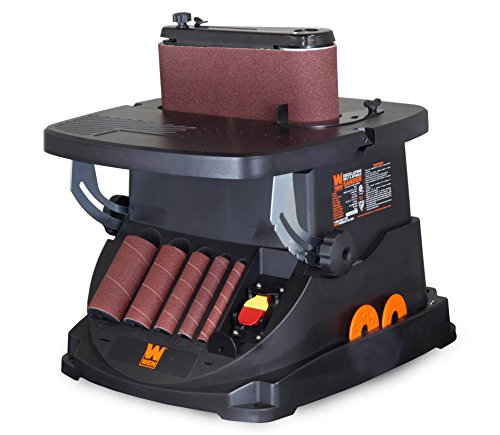 WEN 6524 Oscillating Belt and Spindle SanderCheck Amazon offer
Side-by-side buying comparison
| Model | Family | Sleeve height (in) | Diameters (in) | Belt size | Table tilt | Offer |
|---|---|---|---|---|---|---|
| RIKON 50-320 | spindle | 4.5 | 0.5, 0.75, 1, 1.5, 2, 3 | None documented | 0° | No exact offer matched |
| WEN 6510T | spindle | Not confirmed | 0.5, 0.75, 1, 1.5, 2, 3 | None documented | 0° | Check Amazon offer |
| WEN 6524 | combo | 4.5 | 0.5, 0.75, 1, 1.5, 2 | 4 x 24 in. | 45° | Check Amazon offer |
| WEN HA5932 | portable | 3 | 0.5, 0.75, 1, 1.5 | None documented | Not confirmed | Check Amazon offer |
Check the model guides for regional variations and source qualifications. Table dimensions do not establish performance or material suitability.
Choose the format that removes the most shop friction
Use a fixed-table benchtop machine when concave edges dominate and square work support covers the projects. RIKON documents the source-only 50-320 at 20 pounds with a 12-5/8-by-12-inch table and 12-3/8-by-14-inch base; WEN's 6510T is another documented fixed-table path but carries a 30-pound product-page versus 35-pound manual conflict. Treat either as a station with a real operating envelope, not as a box that disappears between uses.
Choose the WEN 6524 combination only if its 4-by-24-inch belt can remove another recurring sanding setup; its documented 27-pound machine still needs storage for the changeover parts. Choose the WEN HA5932 portable/clamped format only when bringing the tool to suitably supported work is the intended workflow. Its five-pound listing, mounting pad and two supplied clamps do not make every bench, edge or workpiece an approved setup.
Measure the working envelope
Place your largest typical part on the proposed bench and move it through the arc you would use to follow its edge. Allow space for your hands, body position, and the machine controls. Check interference with a wall, clamp rack, neighboring tool, and the extraction hose. Make this exercise with a cardboard footprint if the machine is not available. The goal is a station where the work remains supported and you can stop the machine promptly without stretching around an obstacle.
Choose between storage and permanent readiness
A tool that lives on a shelf must be reasonable for you to lift and carry using the manufacturer's designated provisions. Published shipping weight is not always machine weight, and a conflicting product-page/manual weight should not be converted into false precision. A heavier benchtop model may be a sensible permanent station even when it is a poor storage candidate. If a stand, cart or mounting board is involved, verify its rated capacity, mounting arrangement and stability; convenience does not establish that a support is suitable for sanding loads.
Assess what a combination machine replaces
The WEN 6524 is a documented belt-and-spindle combination, while a WEN 6510T or Grizzly G0739 represents the spindle-only approach. A combo can consolidate functions if your shop needs both. However, a separate belt attachment still needs storage and each change takes attention. Count the tools you would actually remove from the bench. If the existing belt sander remains indispensable, adding another belt function may consume space without producing the consolidation that initially made the combo appealing.
Route extraction before selecting the location
Trace the hose path from the proposed port to your extractor. Leave enough room for an appropriate bend and a connection that does not pull against the tool. Keep the hose away from the stock movement path and check whether table adjustment changes the clearance. The port diameter alone does not tell you how well your system will collect dust. Consult the machine instructions for extraction requirements and choose the required adapters before committing to a tightly packed bench layout.
Store small parts where changes happen
Inserts, sleeve washers, rubber drums, and wrenches are easy to misplace when several machines share a surface. Manufacturer-provided onboard storage can help, but inspect what it holds in the configuration you intend to store. Label a separate container for any remaining parts. Keep the manual accessible and record sleeve dimensions on the container. In a small shop, an organized changeover prevents a temporary pile of accessories from spreading into the remaining assembly space or becoming mixed with another machine's hardware.
Price the space-saving setup, not just the machine
Put the candidate station into the Setup Budget with its delivered machine quote, first useful sleeve replacements, required hose or adapter, secure support and any cart or mounting hardware allowed by the instructions. A combination machine saves money and area only when it genuinely replaces another station. A portable machine saves bench space only when the approved setup can be repeated without buying or improvising new support for every job.
Make the station reversible without improvisation
A planned removable mounting board can make sense only when its attachment to both machine and bench meets the relevant instructions and supports the work securely. Evaluate the complete arrangement rather than assuming clamps are adequate by appearance. Before each session, restore the operating clearances and extraction connection; stored tools often accumulate unrelated items around them. The best small-shop purchase is frequently the machine that can be made ready with a simple, repeatable setup and then stored without losing parts or disturbing other calibrated equipment.
Include the dust connection in the cardboard layout: set a box behind the marked base to represent the outlet and hose bend, then move a representative long part through its path. Work on an empty bench without a powered tool present. A cabinet that forces you to step sideways or change grip belongs on the clearance sketch, even if it sits beyond the machine footprint. Move the proposed station now, while changing the layout costs nothing.
Questions about Spindle Sanders for Small Shops: Plan the Whole Station
Does a small shop always need a portable sander?
No. A dedicated corner for a heavier machine may be more practical than repeatedly lifting a lighter one. Compare access and operating clearance with the storage arrangement you can sustain.
Will a belt-and-spindle combo save bench space?
It can if it replaces another sanding station. Include the space needed for the unused belt assembly, dust hose, and workpiece handling when evaluating that saving.
What dimension is easiest to overlook?
The space swept by the workpiece. Base measurements describe where the machine stands, but curved parts may extend well beyond the table as you rotate and feed them.