comparisons
RIDGID vs Grizzly: Combo or Dedicated Spindle Sander?
Compare the RIDGID EB4424 with the Grizzly G0739 when deciding between a combination sanding station and a compact dedicated curve tool. The EB4424 adds a belt function; the G0739 concentrates on spindle sanding. Whether you need recurring straight-edge work is therefore an early decision, before price or brand preference. The comparison covers these two models from their documentation, without extending the conclusions to either brand's entire range or claiming a tested performance advantage.
As an Amazon Associate I earn from qualifying purchases. How affiliate links work.
Some compared models have no matched Amazon offer. Check each model row; alternative listings do not represent missing exact offers.
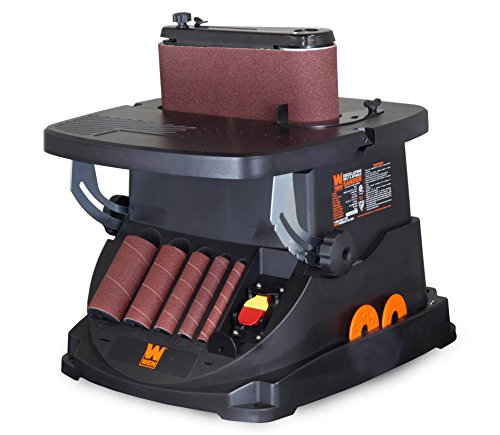 WEN 6524 Oscillating Belt and Spindle SanderCheck Amazon offer
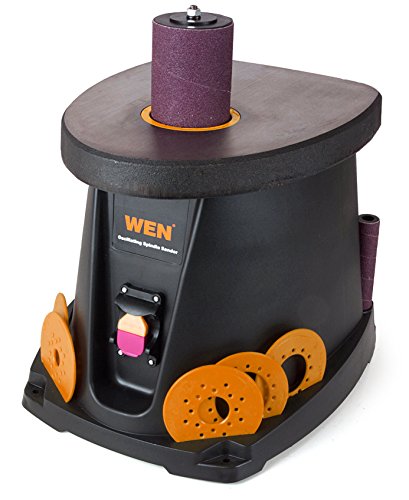 WEN 6510T 3.5 Amp Oscillating Spindle Sander,BlackCheck Amazon offer
Side-by-side buying comparison
| Model | Family | Sleeve height (in) | Diameters (in) | Belt size | Table tilt | Offer |
|---|---|---|---|---|---|---|
| RIDGID EB4424 | combo | 4.5 | 0.5, 0.75, 1, 1.5, 2 | 4 x 24 in. | 48° | No exact offer matched |
| Grizzly G0739 | spindle | 4.5 | 0.5, 0.75, 1, 1.5, 2, 3 | None documented | 0° | No exact offer matched |
Check the model guides for regional variations and source qualifications. Table dimensions do not establish performance or material suitability.
Name the functional difference before comparing cost
RIDGID documents the EB4424 as an edge belt and spindle sander. Grizzly identifies the G0739 as an oscillating spindle sander. The extra belt mode gives the RIDGID a different scope, but only projects that use that mode benefit from it. If you have a separate straight-edge sanding station, the Grizzly may address the missing curve capability directly. If both functions are absent and the shop is cramped, the RIDGID configuration may solve two recurring needs in one location.
Assess the broad-curve requirement
Grizzly lists G0739 sanding sleeve sizes extending from 1/2 inch through 3 inches. That range makes the largest included sleeve worth considering for broad curves. A larger diameter is not inherently superior, and the smallest concave recess still has to admit the selected abrasive with a controllable path. Check the exact RIDGID package and approved diameters separately. The useful comparison is which included or approved sleeve sizes match the templates and parts you make, rather than which carton contains more pieces overall.
Determine whether beveled work belongs in the decision
The EB4424 manufacturer listing documents a tilting table arrangement. The G0739 is a simpler fixed-table spindle option. If your recurring parts need a supported beveled edge, that feature difference can decide the comparison before other preferences matter. If your edges remain square, a tilting mechanism may be a convenience you do not require. Do not improvise wedges or unsupported lifting to make a fixed-table tool behave like a documented beveling machine. Choose a suitable model when angled work is a real requirement.
Look at what remains set up between jobs
A G0739 station can stay arranged around the selected sleeve, with ordinary size changes as projects demand. The EB4424 can cover a broader set of operations, but using both means transitioning between modes. Think about your actual bench routine: do curves appear as one batch at the end, or between repeated straight-edge fitting steps? The value of readiness depends on that answer. A tool with fewer modes may fit a focused process, while a combo can be convenient when the work is naturally divided into stages.
Compare documentation and support for the offered machine
Grizzly provides a G0739 owner manual and parts information. RIDGID provides EB4424 documentation through its product and support pages. Use those exact records when identifying components and understanding service questions. If the RIDGID offer is actually an R4840, stop using the EB4424 specification set and obtain the correct documentation. For either brand, confirm current parts availability and coverage conditions instead of assuming that a familiar name guarantees immediate replacements, transferable protection, or a particular repair turnaround.
Choose the configuration that removes a bottleneck
Select the G0739 category when a dedicated compact spindle station covers your approved tasks and straight-edge work already has a solution. Investigate the EB4424 when the belt and table adjustment serve identifiable project needs. Compare total current setup cost only after confirming those capabilities. If both miss an important requirement, expand the shortlist rather than treating this pair as the only choices offered by the brands. A useful recommendation explains what each machine would do in your shop and where another method would still be needed.
List a broad inside curve with no beveled edges as the first job. The G0739 may cover it without adding a belt mode. Add recurring straight-edge sanding and a bevel operation to the list, then check the EB4424's documented setup for those requirements. The shortlist changes because the work changes. Neither result establishes a finish-quality advantage; it identifies which operations the station needs to accommodate.
Questions about RIDGID vs Grizzly: Combo or Dedicated Spindle Sander?
Is this a comparison of every RIDGID and Grizzly sander?
No. It uses RIDGID EB4424 and Grizzly G0739 as concrete examples of a combo and a dedicated spindle station. Other models require their own specifications and evaluation.
Which is the more direct choice for curves only?
The G0739 is the spindle-only option in this pair. Verify its sleeve sizes, work height, table support, and approved use against your actual parts before choosing it.
What if the RIDGID listing says R4840?
Treat it as a separate model. Obtain R4840-specific information and do not apply the EB4424 table range, accessories, or operating details merely because the brand and general tool type match.