models
Grizzly G0739 Spindle Sander Guide
Choose the Grizzly G0739 category when a compact fixed-table station, six sizes through 3 inches and no belt changeover match the work. Stop if supported bevel sanding, an integrated belt or an exact retained Amazon offer is required. Current Grizzly documentation supports the machine facts below; it does not establish cross-model parts compatibility or tested performance.
As an Amazon Associate I earn from qualifying purchases. How affiliate links work.
No exact Amazon offer was matched for this model. The listings below are alternative machines to investigate, not this model or guaranteed equivalents.
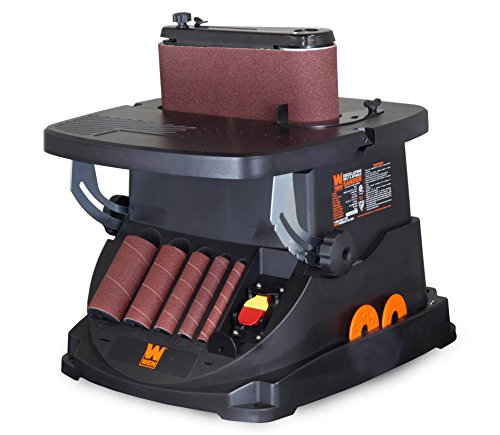 WEN 6524 Oscillating Belt and Spindle SanderCheck Amazon offer
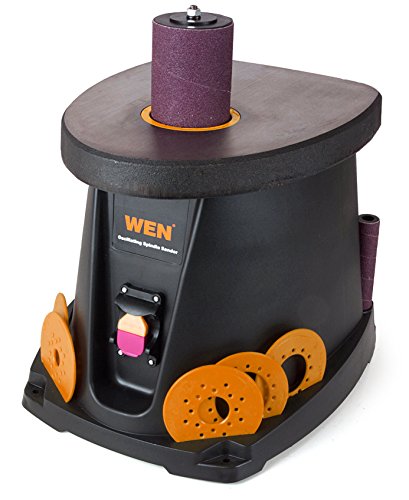 WEN 6510T 3.5 Amp Oscillating Spindle Sander,BlackCheck Amazon offer
Documented specifications for Grizzly G0739
| Model | Family | Sleeve height (in) | Diameters (in) | Belt size | Table tilt | Offer |
|---|---|---|---|---|---|---|
| Grizzly G0739 | spindle | 4.5 | 0.5, 0.75, 1, 1.5, 2, 3 | None documented | 0° | No exact offer matched |
- Machine weight
- 30 lb
- Documented spindle speed
- 2000 RPM
- Dust port
- 1.5 in
Manual applies to machines manufactured since June 2015.
Six sleeves but five rubber drums: the 1/2 in. sleeve mounts directly to the spindle.
Internal V-belt drive is not a sanding-belt mode; fixed table has no documented tilt.
4-1/2 in. documented drum/abrasive format; not a workpiece capacity claim.
US 120V documentation.
A broad diameter range in a compact machine
The August 6, 2026 specification sheet and current manual identify a 1/2-HP, 120V, 3.5A permanent-magnet motor with V-belt drive, 2000-RPM spindle speed, 58 oscillations per minute and a 5/8-inch stroke. Six 4-1/2-inch sleeves run from 1/2 to 3 inches, while only the five larger sizes use rubber drums; the 1/2-inch sleeve mounts directly to the spindle. Machine weight is listed as 30 pounds, and the fixed cast-iron table is 15 by 11-1/2 inches. These dimensions describe the machine, but abrasive length is not unrestricted workpiece capacity and the internal drive belt is not a sanding-belt mode.
Use large and small radii deliberately
A small spindle can reach into a tight inside corner, but it also concentrates contact in a narrow region. A broad, gradual curve may be easier to maintain with a larger diameter that better matches its shape. Choose by the concave radius and the room available for the rest of the blank to move. If a profile combines a generous arch with a narrow return, divide the work into regions rather than forcing one spindle to resolve both. Keep the transition smooth by stopping to inspect the whole outline. That geometric reasoning applies to the G0739’s diameter selection without implying tested superiority of any particular supplied drum.
Size the station around the moving blank
A small sander base can tempt you to place the machine between other tools. The actual operating envelope is larger because a long part sweeps around the spindle. Make a paper or cardboard outline of your biggest recurring component and move it through the proposed station before drilling mounting holes. Check the clearance at both ends of the travel, not merely where sanding begins. A narrow rail can extend surprisingly far behind the machine when rotated through an internal curve. Place task lighting so your hands do not cast the marking line into shadow, and maintain direct access to the switch throughout the operation.
Check sleeve fit beyond the nominal diameter
Grizzly’s documented 4-1/2-inch format is a starting specification for replacement abrasive shopping, not permission to substitute arbitrary same-diameter sleeves. Confirm backing, grit, height and the intended support method. The documented package has six sleeves, five rubber drums, six inserts and three spindle washers because the smallest sleeve does not use a separate drum. On a used machine, compare every component with the G0739 inventory and parts drawing. A fresh sleeve cannot compensate for a missing insert, wrong washer or deteriorated drum, and a similar G0538, G0723 or W1831 component is not proven interchangeable.
Distinguish airflow at the port from collector advertising
The manual identifies a 1-1/2-inch dust connection and recommends 100 CFM at the machine port. A collector’s headline airflow is not a promise of that flow after the hose, adapters, and branch connections. Plan a short, uncomplicated connection where feasible and follow the manufacturer’s extraction requirements. For purchasing, include any adapter and appropriate collection equipment in the station plan. Also reserve room to inspect and clean around the spindle. A compact tool can accumulate dust in places that are inconvenient to reach if permanently boxed into a tight cabinet, so preserve service access as well as the space needed for workpieces.
Build an abrasive log around actual projects
A simple G0739 consumable note can record the diameter and grit used for a particular bracket pattern, plus the replacement product number. It need not become an elaborate maintenance system. Its value is remembering which abrasive format was confirmed to fit and which contour required a drum change, so the next batch starts with a deliberate setup instead of trial and error.
Questions about Grizzly G0739 Spindle Sander Guide
What makes G0739 different from G0723?
They have separate specifications and manuals. Compare the documented table, oscillation, weight, dust connection, and revision details rather than assuming Grizzly’s similar product numbers identify the same mechanism.
Are 4-1/2-inch sleeves the same as maximum stock height?
No. Abrasive length and supported stock capacity describe different things. Oscillation and table position affect the usable contact region; consult the operating documentation for the actual task.
Does it include a 3-inch sanding size?
The manufacturer manual lists a six-diameter assortment including 3 inches. Confirm that all corresponding parts remain present when inspecting a used example, because the assortment alone does not prove completeness.