models
Grizzly G0723 Spindle Sander Guide
Choose the G0723 category when its fixed 18-inch-square cast-iron table and one-inch oscillation stroke address a real support need. Keep it on hold when exact motor current, sleeve height or package completeness matters and the offered machine cannot be tied to its serial-specific documents. Grizzly's current sheet, manual and label artwork conflict on several fields, so this guide preserves the disagreement instead of creating one blended specification.
As an Amazon Associate I earn from qualifying purchases. How affiliate links work.
No exact Amazon offer was matched for this model. The listings below are alternative machines to investigate, not this model or guaranteed equivalents.
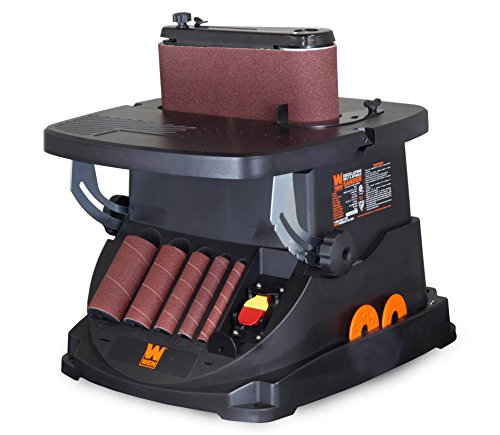 WEN 6524 Oscillating Belt and Spindle SanderCheck Amazon offer
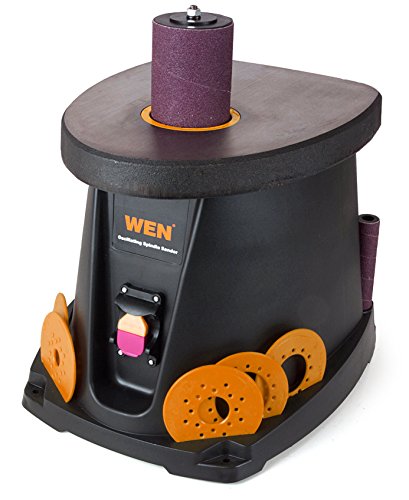 WEN 6510T 3.5 Amp Oscillating Spindle Sander,BlackCheck Amazon offer
Documented specifications for Grizzly G0723
| Model | Family | Sleeve height (in) | Diameters (in) | Belt size | Table tilt | Offer |
|---|---|---|---|---|---|---|
| Grizzly G0723 | spindle | Not confirmed | 0.5, 0.75, 1, 1.5, 2, 3 | None documented | 0° | No exact offer matched |
- Machine weight
- 46 lb
- Documented spindle speed
- 1725 RPM
- Dust port
- 2 in
Current manual applies to machines manufactured since March 2024.
July 6, 2026 sheet and label say 1/4 HP; manual motor table says 1/3 HP.
Sheet contains both 2.6A and 3.5A; manual table says 3.5A while label artwork says 2.6A.
Abrasive/drum length conflicts: data sheet 4-1/2 in. versus older label artwork 4 in.; confirm serial-specific fit.
Current sheet lists five inserts while manual inventory lists six; inventory text also confuses six sleeves with five rubber drums.
US 120V documentation.
Read the revision before comparing numbers
The current July 6, 2026 sheet and manual agree on a fixed 18-by-18-inch cast-iron table, 46-pound weight, 1725-RPM spindle speed, 30 oscillations per minute, one-inch stroke and six sleeve diameters from 1/2 to 3 inches. They do not give one clean electrical record. The current sheet and label artwork say 1/4 HP, while the manual's February 2024 motor table says 1/3 HP. The sheet contains both 2.6A and 3.5A entries; the manual motor table says 3.5A while its label artwork says 2.6A. Use the exact unit's nameplate and ask Grizzly to resolve the revision before ordering electrical parts.
The square table is a support choice
An 18-inch-square table may appeal when a shaped blank has a broad reference face, but tabletop dimensions alone cannot predict stability during every part of a curve. Take a typical workpiece outline and consider how much supported area remains as you rotate it around the spindle. A long narrow component can still tip even on a generous square surface. Plan additional support only through an appropriate stable setup that does not interfere with feed or hand clearance. For a buyer comparing this machine with a smaller sander, the useful question is whether the extra support helps recurring parts, rather than whether the larger table wins a specification contest.
Do not resolve abrasive length by guesswork
The current sheet and manual data table list 4-1/2-inch sanding-drum length, while machine-label artwork says 4 inches. The current sheet lists five table inserts; the manual inventory lists six. Its wording also calls the package six sanding drums and sleeves even though the component chart shows five rubber drums plus six sleeves because the 1/2-inch sleeve mounts without a separate drum. These are manufacturer-record conflicts, not permission to average counts or assume universal fit. Ask for serial-specific replacement identifiers and compare the complete physical inventory before ordering.
Evaluate oscillation as motion, not a finish guarantee
A 1-inch stroke describes vertical travel; 30 oscillations per minute describes its frequency. Neither number tells you by itself how the G0723 will finish your chosen wood with a particular grit. Workpiece pressure, surface preparation, grain changes, and abrasive condition remain part of the outcome. For curved furniture components, establish the shape close to the line before sanding and leave time for inspection between passes. If one region loses material faster than another, reconsider how it is contacting the drum. Avoid using prolonged pressure to chase a stubborn saw mark if that would distort the overall profile or alter a reference edge.
Account for the collection requirement at the station
Grizzly specifies a 2-inch dust port and a 400-CFM recommendation at the port in the current manual. Treat that as a manufacturer installation requirement to discuss with your extraction supplier, not as a guarantee that any collector bearing a larger advertised number will satisfy it. Hoses and fittings affect delivered airflow. Plan clearance for the connection and for cleaning the spindle region. With a 46-pound listed weight, also consider how often the tool will move and whether a permanent position makes sense. A dedicated station may be more useful than nominal portability if each setup requires reconnecting extraction, shifting neighboring tools, and rechecking support.
Bring specific questions to support
A useful G0723 support request includes the serial label, manufacture date, a photo of the existing drum beside a ruler, and the conflicting manual page references. Ask for the current replacement sleeve identifier for that exact unit. That is much more actionable than asking which generic sleeve length is correct, and it avoids turning a document inconsistency into an expensive consumable order.
Questions about Grizzly G0723 Spindle Sander Guide
What horsepower is the G0723?
The current manual contains conflicting descriptors: its model title says 1/4 HP while its newer motor data says 1/3 HP. Confirm the exact machine nameplate and manufacture date with Grizzly rather than relying on a generic listing.
Should I order 4-inch or 4-1/2-inch sleeves?
Resolve that with a current model-and-serial-specific replacement listing. The linked manual contains both lengths in different sections, so this guide deliberately does not declare either universally compatible.
Is the G0723 table adjustable for bevels?
The cited configuration is a fixed-table spindle machine. If angled support is a recurring need, compare an explicitly beveling model and verify its insert arrangements and workpiece support.