accessories
Accessories for Portable Spindle Sanders
Portable spindle sanders need their own accessory checks. Their sleeve systems, support surfaces, bench-mounting hardware, and hose connections should not be inferred from a larger benchtop machine. Begin by deciding which manufacturer-approved configuration you need, then inventory its required components. Triton’s portable and bench refill listings illustrate the distinction: use their named model records to match parts, then check the complete kit for the configuration you intend to use.
As an Amazon Associate I earn from qualifying purchases. How affiliate links work.
The WEN 5932SPC offer is a WEN portable-sander refill to verify against the HA5932 manual. It is not a refill for the Triton TSPSP650 example in this guide; no exact Triton portable refill offer has been verified.
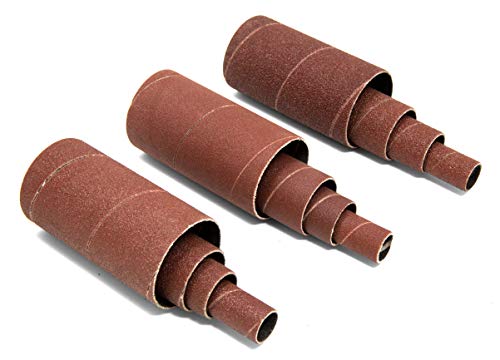 WEN 5932SPC Replacement Spindle Sanding Sleeves, Assorted Sandpaper Grits, 12 PackCheck Amazon offer
Keep portable and benchtop refill families separate
A shared brand name does not make two sleeve families interchangeable. Triton sells a TSPSS150G4PK sleeve set identified for the TSPSP650, while its TSS150G listing identifies the TSPS450. Portable sleeve set, Benchtop sleeve set. Use the complete tool model and accessory SKU when searching, not simply Triton sanding sleeves. Compare the dimensions in the matching manual and accessory record, preserving their labels rather than estimating from photographs. A portable tool can use a different sleeve height even when nominal diameters look familiar. Keep both the model and sleeve SKU on the refill label so a later order does not default to the benchtop pack.
Purchase for the intended configuration
Some portable tools are designed for more than one operating arrangement, but that capability depends on the model and its specified accessories. Triton's TSPSP650 product page describes a bench-mountable portable sander. Triton TSPSP650. Before buying a used example or an accessory bundle, identify the parts required for your intended arrangement in the manual. Ask whether those supports, clamps, or base components are included. Do not assume that an unrelated clamp makes a handheld-only tool suitable for inversion, or that a photograph of a mounted tool proves an approved configuration. The purchasing goal is to obtain the complete manufacturer-designed arrangement and its instructions.
Inspect supports and clamps as functional parts
A portable sander's base and mounting accessories are part of how the tool is supported and controlled. When evaluating secondhand hardware, ask for close photographs of contact surfaces, locating features, threads, and any visibly damaged areas. Identify the items in the parts drawing and establish whether replacement components remain available. A generic clamp may exert force without providing the specific fit or location the original accessory supplies. Prefer the correct part or a documented approved substitute. Include any mounting-surface requirements in the compatibility question; the clamp and the surface it grips must be considered together. Do not buy an incomplete arrangement on the assumption that ordinary workshop hardware will necessarily finish it.
Think about the hose as a moving connection
The hose connection on a handheld tool experiences a different routing problem from a fixed machine. Assess whether the proposed adapter and hose combination permits the intended movement without awkward pulling or interference. Establish physical fit at the actual port and cuff, and ask about a supported connection arrangement if the documentation is unclear. This is a buying check for the connection, not a claim that any particular extractor provides sufficient dust control. Consider the whole hose path and where it will be supported during the approved setup. An oversized rigid adapter stack can be inconvenient even when individual fittings join, so compare complete assemblies rather than collecting reducers one at a time.
Organize the kit around repeatable completeness checks
A portable tool often returns to a case or shelf after each job. Use a labelled inventory for sleeves, drums, mounting parts, tools, and removable connectors so missing pieces become obvious before the next project. Keep abrasive supplies separate from hard components that could damage their edges. Save the model manual with the kit or a clearly identified digital copy, and record which regional version applies. If replacing the case, compare internal layout and support rather than external volume alone. A useful case protects the complete accessory set and preserves its identity. The result is a kit that can be checked quickly without borrowing similar-looking components from a benchtop machine.
When comparing accessory cases or bundles, make a separate line for every mounting component. A count of sanding sleeves can make a package look complete while a crucial support or specified clamp is absent from the contents.
Questions about Accessories for Portable Spindle Sanders
Can portable and benchtop sleeves share a brand but differ?
Yes. Match the exact tool model, sleeve record, and accessory SKU.
Can any portable sander be clamped upside down?
Only use configurations the tool manufacturer explicitly designs and permits, with the specified mounting components.
What should I check in a used portable kit?
Compare all required supports, clamps, sleeves, drums, and connectors with the exact manual inventory.