accessories
Replacement Rubber Drums for Spindle Sanders
A rubber sanding drum is part of the machine's holding system, not simply a cylinder with the right outside diameter. Replacement decisions need to account for the spindle interface, drum height, end surfaces, and specified hardware. Before ordering a replacement or an aftermarket kit, establish whether the missing or damaged item is the support drum itself or only the abrasive sleeve.
As an Amazon Associate I earn from qualifying purchases. How affiliate links work.
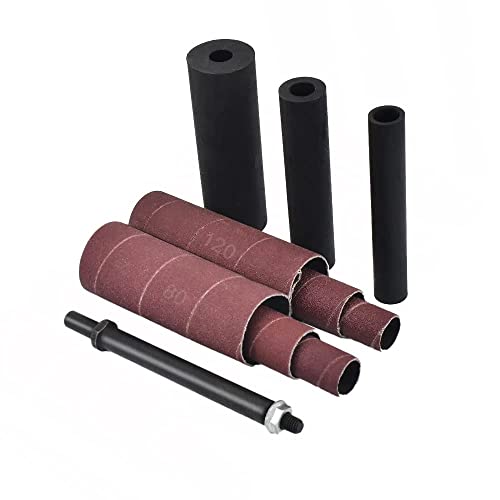 scottchen PRO Spindle Sander Adaptor 4-1/2" x 1/2" with Rubber Sanding Drum Kit OD 3/4", 1", 1-1/2" and Sandpaper Sleeves Grit# 80,120 - S/10Check Amazon offer
 Olamochi Spindle Sander Drum & Sleeve Replacement KitCheck Amazon offer
Identify the support component correctly
Describe the item you need as a rubber sanding drum and include its position in the manufacturer's parts drawing. Suppliers sometimes use spindle, drum, and sleeve loosely in product titles, so the drawing prevents misunderstandings. A complete accessory kit may combine several of these items, while an inexpensive replacement listing may show only the abrasive. Grizzly explains the distinction between the supporting drum and the sleeve in its spindle-sander overview. Grizzly spindle-sander overview. Establish which component is missing before comparing prices. If buying a used machine, count actual drums against its manual rather than counting abrasive cylinders in the seller's photograph.
Match the spindle interface and end geometry
The outside diameter is only the most visible dimension. A replacement also needs the correct central bore or mounting interface, suitable end geometry, and compatibility with the machine's retaining hardware. A part that slides over the shaft has not necessarily met those requirements. Ask an aftermarket supplier to identify the exact machine models supported and the required hardware, preferably in writing. If the supplier can confirm only a nominal drum diameter, the compatibility question remains open. Do not plan to enlarge a bore, trim a drum, or improvise end spacers to make an uncertain purchase usable. Choose a documented replacement system that preserves the manufacturer's intended support and retention arrangement.
Do not assume every sleeve has its own drum
Some machine designs support their smallest sleeve differently from the larger sizes. For example, the Grizzly T27417 manual identifies its half-inch sleeve as mounting directly on the spindle without a rubber drum. T27417 manual. This is a model-specific exception, not an instruction to omit drums elsewhere. The purchasing lesson is that a five-sleeve inventory need not require five rubber supports. Use the original inventory and parts drawing to determine whether a component is genuinely absent. That check is especially useful when buying a secondhand sander whose owner has grouped all accessories together without retaining the original labels or instructions.
Evaluate condition before replacing the whole set
With the tool disconnected and following its inspection instructions, look for visible damage that you can describe to support: cracks, missing material, distorted end surfaces, or a damaged bore. Photograph the condition and preserve the part identification. Do not conclude that sleeve slipping proves the entire drum set is worn; wrong sleeves, wrong hardware, or an assembly problem can resemble a drum fault. Equally, a visibly damaged support is not restored by purchasing a thicker abrasive. Let the model's troubleshooting guidance or service department determine which component needs replacement. Ordering one identified part can be more sensible than acquiring a complete generic drum kit whose mounting requirements are uncertain.
Keep the new drum tied to its machine
Label the storage location with the machine model and drum part number, especially if the shop owns more than one sander. Similar-looking rubber supports can become mixed during cleanup or a shared workshop session. Keep the replacement packaging until the specified compatibility has been confirmed through the manufacturer's prescribed checks. Note whether the order included a sleeve, a washer, or neither so future purchases do not duplicate unnecessary items. If the original part has been superseded, save the support message identifying the replacement and any associated components required. That written trail is useful years later when the replacement itself needs attention or the machine changes hands.
For special-order parts, confirm the return conditions before purchase while the compatibility inquiry is still open. That information belongs in the buying decision, particularly when the original damaged drum cannot provide a trustworthy measurement reference.
Questions about Replacement Rubber Drums for Spindle Sanders
Are rubber sanding drums universal?
No. Outside diameter alone does not establish the spindle interface, height, or retaining-hardware compatibility.
Does a missing half-inch drum mean my kit is incomplete?
Not necessarily. Some models mount that sleeve directly on the spindle; check the exact manual.
Should I modify a drum bore to fit?
Choose a documented compatible replacement instead of modifying an uncertain support component.

