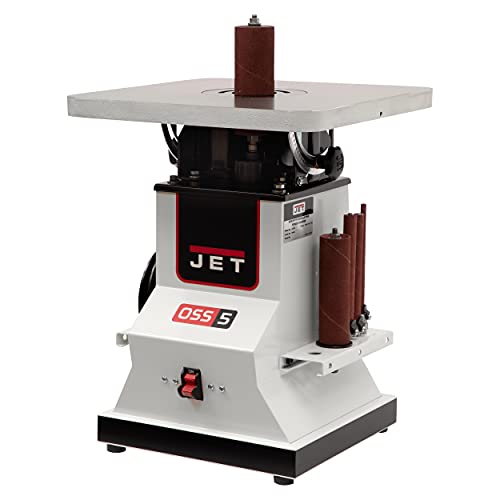
models
Delta 31-780 BOSS: Legacy Sander Buying and Parts Guide
The Delta 31-780 BOSS is a legacy bench oscillating spindle sander. Buying or maintaining one is primarily a condition-and-parts decision: the completeness of its spindle assemblies, inserts and retaining hardware can matter more than a remembered catalog specification. An archived Delta instruction manual dated April 30, 2001 confirms the model and its setup procedures. This guide avoids filling gaps in that evidence with specifications borrowed from later Delta sanders.
As an Amazon Associate I earn from qualifying purchases. How affiliate links work.
No exact Amazon offer was matched for this model. The listings below are alternative machines to investigate, not this model or guaranteed equivalents.
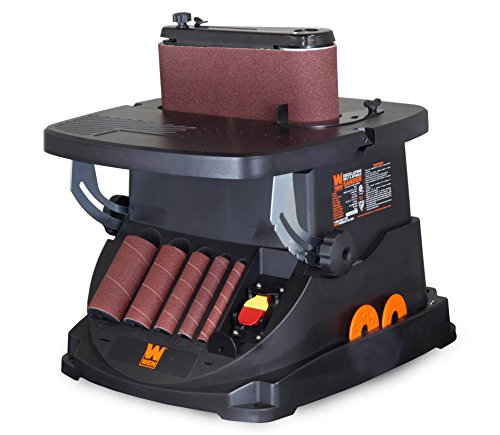 WEN 6524 Oscillating Belt and Spindle SanderCheck Amazon offer
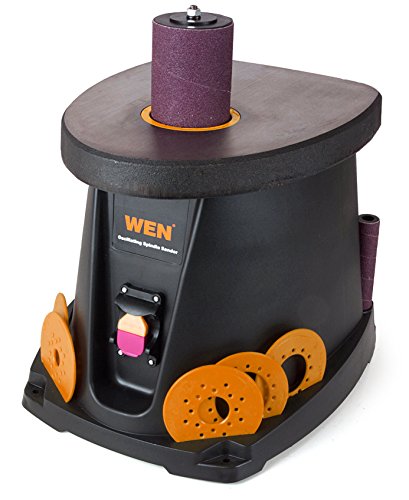 WEN 6510T 3.5 Amp Oscillating Spindle Sander,BlackCheck Amazon offer
Documented specifications for Delta 31-780
| Model | Family | Sleeve height (in) | Diameters (in) | Belt size | Table tilt | Offer |
|---|---|---|---|---|---|---|
| Delta 31-780 | spindle | Not confirmed | Not confirmed | None documented | Not confirmed | No exact offer matched |
- Machine weight
- Not confirmed lb
- Documented spindle speed
- Not confirmed RPM
- Dust port
- Not confirmed in
Legacy model confirmed by Delta manual dated 2001-04-30.
Dimensions and operating values not sufficiently verified; unknown fields intentionally null.
Stand 50-780 is accessory.
Do not substitute 31-483 or other Delta model specifications.
Begin with identity and the original manual
The archived manual identifies the 31-780 and shows it with an accessory 50-780 stand. The stand is a separate item; a machine being offered without it is not necessarily incomplete. Verify the actual model plate, because later Delta spindle sanders and differently numbered accessories can appear together in online searches.
Save a copy of the manual that matches the machine and record the serial information before buying parts. Photographs should show the table, spindle mount, switch, cord and every loose accessory. Ask the seller to distinguish original components from replacements or homemade pieces. A familiar BOSS label is useful for identification but should not be treated as proof that all generations, regional versions or similarly named Delta machines share the same mounting system.
Lay out accessories before judging the offer
A spindle sander can turn on and still be inconvenient or unsuitable to use if the correct inserts and retaining parts are absent. Arrange the assemblies by diameter and compare them with the manual's illustrations. Look for the spindle adapter, arbor screw, drums, sleeves and table inserts that belong to the offered configuration.
Consumable abrasive paper and a missing proprietary mounting component are different problems. The first may be straightforward once its dimensions are confirmed; the second requires evidence that an appropriate part can be obtained. Do that research before accepting a low purchase price as good value. Do not assume that a sleeve kit marketed for several brands includes the hardware needed to make an incomplete Delta assembly usable.
Inspect the mounting and support surfaces
With the machine disconnected, look at the table for damage that affects flat support and examine the insert seating area for debris or broken edges. A heavily scratched surface is not automatically unusable, while a loose or poorly seated insert can directly affect control near the abrasive. Check the mounting hardware for obvious damage or improvised alterations.
Try the intended workpiece motion without power. A small part should not catch on an insert lip; a larger one should have adequate clearance around the spindle and bench. Examine the abrasive support rather than judging only the paper's appearance. Hardened, distorted or damaged drums can prevent a sleeve from being held correctly. Avoid using force to make uncertain parts seat, since that can hide a mismatch and damage threads.
Watch rotation and oscillation separately
A safe demonstration should establish that the machine rotates and that its vertical oscillating movement works. Ask for a simple scrap-sanding demonstration after the proper accessories are installed. Check the resulting edge with a square and compare its curve to the layout, rather than evaluating the machine entirely by sound or the apparent smoothness of the motor.
The purpose is to identify a usable setup, not to demand that decades-old equipment look new. Vibration may come from mounting, an abrasive assembly or mechanical wear; it should be explained rather than dismissed. A seller's assurance that the tool has always sounded that way is not a diagnosis. If the machine needs service, establish who can perform it and which parts are required before making it the only sander available for a deadline.
Treat consumable dimensions as measurements to confirm
The Delta manual describes removal of the abrasive sleeve and sanding drum from the spindle adapter, followed by reassembly and replacement of the insert. That establishes a model-specific retention sequence. It does not justify assuming that another manufacturer's complete spindle will fit because the paper diameter appears similar.
Measure a known correct sleeve and record both diameter and length. Confirm the mounting and retaining details separately if buying a complete assembly. When dimensions cannot be verified from the original part or appropriate documentation, leave the specification unknown rather than selecting the most frequently repeated online number. This approach is particularly useful for a legacy machine, where a previous owner may already have substituted an abrasive or component that was only approximately suitable.
Decide whether restoration suits your workshop
A complete, demonstrated example may suit occasional curved-edge work. An incomplete project machine makes more sense when you have time, a reliable parts path and another way to finish current work. List the missing components and service tasks before deciding which category an offered unit belongs to.
For an existing owner, prioritize accurate support, safe controls and confirmed consumables before cosmetic restoration. Keep a dated record of part numbers and successful replacements, but label any unverified cross-brand suggestions as such. That record is more useful for future maintenance than an unsupported claim that every common spindle-sander sleeve or drum is universal.
Questions about Delta 31-780 BOSS: Legacy Sander Buying and Parts Guide
Is Delta 31-780 a genuine spindle-sander model?
Yes. The archived Delta manual identifies it as a bench oscillating spindle sander and is dated April 30, 2001.
Was the stand part of the basic machine?
The cited manual describes the pictured 50-780 stand as an accessory. Check an individual sale for what is actually included.
Why are many comparison specifications blank?
The reviewed primary manual evidence did not firmly establish all normalized dimensions and operating figures. Unknown values are safer than borrowing data from another Delta model.