models
Shop Fox W1846: Fit Checks and Specification Conflicts
Choose the W1846 category when its fixed 18-inch-square cast-iron table, one-inch stroke and 2-inch dust connection suit the station. Stop when exact sleeve height is unresolved, table tilt or a sanding-belt mode is required, or a similar W1831 component is being treated as compatible without approval. The W1846 is a separate direct-drive machine, not a later model number that inherits W1831 parts or specifications.
As an Amazon Associate I earn from qualifying purchases. How affiliate links work.
No exact Amazon offer was matched for this model. The listings below are alternative machines to investigate, not this model or guaranteed equivalents.
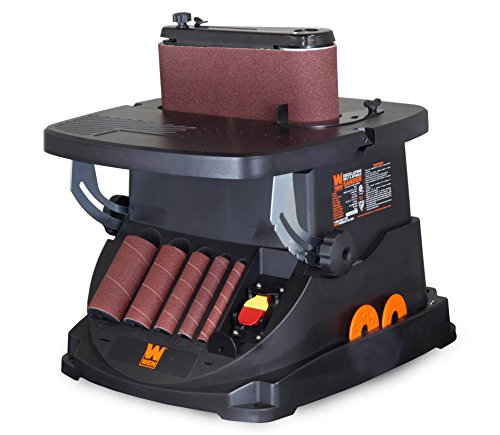 WEN 6524 Oscillating Belt and Spindle SanderCheck Amazon offer
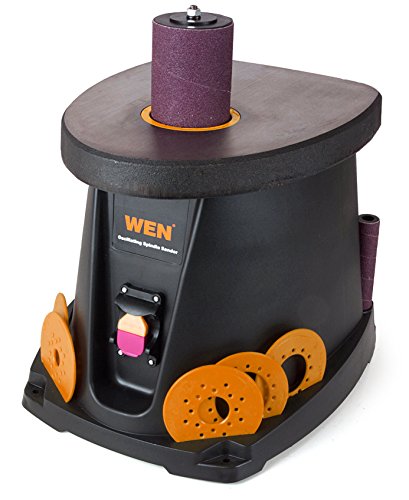 WEN 6510T 3.5 Amp Oscillating Spindle Sander,BlackCheck Amazon offer
Documented specifications for Shop Fox W1846
| Model | Family | Sleeve height (in) | Diameters (in) | Belt size | Table tilt | Offer |
|---|---|---|---|---|---|---|
| Shop Fox W1846 | spindle | Not confirmed | 0.5, 0.75, 1, 1.5, 2, 3 | None documented | 0° | No exact offer matched |
- Machine weight
- 46 lb
- Documented spindle speed
- 1725 RPM
- Dust port
- 2 in
Manual specification says 4.5-inch drum length; machine-label artwork says 4 inches. Measure and confirm sleeve before ordering.
Manual applies to machines manufactured since June 2017.
Fixed table.
Direct-drive dedicated spindle machine; no sanding-belt mode or table-tilt range documented.
Smallest .5-inch sleeve has no separate rubber drum in selection chart.
Do not rank the machine by model number
The W1846 manual for machines manufactured since June 2017 identifies a 1/4-horsepower, 120V, 2.6A TEFC capacitor-start induction motor with direct drive, 1,725-RPM spindle speed and 30 oscillations per minute through a one-inch stroke. Those facts differ from the W1831's motor, drive and motion record. Neither set proves a finish advantage, and neither machine has a documented sanding-belt mode or table-tilt range.
A useful comparison starts with the project. Thin curved components, thick end grain and long sweeping profiles place different demands on support and handling. Decide which of those dominates your work, then inspect the relevant accessories and table arrangement. A larger model number is not a promise of higher capacity. Similarly, a lower horsepower label is not a complete description of how abrasive condition, feed pressure and contact area will affect a small finishing pass.
Resolve the 4-inch versus 4-1/2-inch discrepancy
The manual's specification table lists a 4-1/2-inch sanding drum length, while machine-label artwork later in the same document says 4 inches. The current product listing agrees with 4-1/2 inches. Since a replacement abrasive must fit the actual assembly, the published 4-1/2-inch figure still needs confirmation for the unit you own.
Measure an existing correct sleeve and identify the drum assembly and machine serial information before placing a bulk order. If there is no trustworthy sleeve on the machine, ask the manufacturer or parts supplier to confirm the appropriate replacement. Do not shorten a sleeve or alter retention hardware merely to reconcile conflicting catalog text. A fit check should include secure clamping and working clearance, not only whether paper can be slipped over the rubber.
Read the six-size arrangement correctly
The manual's selection chart shows a 1/2-inch sleeve fitted without a separate rubber drum, followed by 3/4-, 1-, 1-1/2-, 2- and 3-inch drum-supported sizes. A list of five rubber drums therefore need not mean that the smallest sanding size is missing. Check the individual pieces against the chart rather than counting only the largest visible components.
Lay the hardware out in size groups with the machine unplugged. Keep the matching washer and insert beside each drum so reassembly is unambiguous. On a used unit, look for flattened rubber, damaged sleeve edges and improvised fasteners. These condition details can explain slipping or inconsistent contact without proving a motor fault. Replace damaged components with confirmed parts rather than tightening harder to disguise their condition.
Give the 46-pound machine proper support
Shop Fox publishes an 18-by-18-inch cast-iron table, 46-pound net weight and a 2-inch dust port for the W1846. Plan a secure mounting surface with space for the full movement of the intended work. The larger table and greater listed weight distinguish its station from the W1831, but they do not prove lower vibration, better finish or easier handling.
A hose should reach the outlet without pulling sideways on the machine or crossing the operator's feet. Consider where long components will swing and keep both the extraction connection and stored accessories outside that path. Put measuring tools close enough to check an edge frequently, but away from dust discharge and vibration. A useful station makes verification easy; a cramped one encourages finishing a whole batch before discovering that the first setup was inaccurate.
Use a scrap sequence to separate setup problems
Before sanding a finished component, choose a flat scrap with a clear reference face and a simple marked curve. Check that it sits evenly on the table, then make a few restrained passes and inspect the edge. This is a setup exercise for the owner, not a test result claimed by this guide.
If the surface is tapered, first consider face support and the table-to-spindle relationship. If the abrasive slips, inspect the specified retention arrangement with power disconnected. If rotation continues but vertical travel stops, investigate the oscillating mechanism through the manual or qualified service rather than compensating with hand movement. Treat each symptom separately. Changing grit, applying extra force and adjusting unrelated hardware all at once makes it harder to identify the actual cause.
Questions about Shop Fox W1846: Fit Checks and Specification Conflicts
Why is sleeve height marked unknown here?
Official W1846 documentation conflicts: the specification table says 4-1/2 inches, while label artwork says 4 inches. Verify the actual assembly before ordering.
Does W1846 use the same dust connection as W1831?
The W1846 manual specifies a 2-inch port. W1831 documentation specifies 1-1/2 inches, so do not assume the same adapter will fit.
Are there five or six sanding sizes?
The chart provides six abrasive sizes. The smallest 1/2-inch sleeve does not require a separate rubber drum, which explains a five-drum inventory.