brands
Grizzly Spindle Sanders: Bench, Combination, or Floor?
Grizzly's current documented choices include three distinct dedicated benchtop spindle formats and the T27417 belt-and-spindle combination. Begin with the required table support, curve radius and need for a belt, then stop on any unresolved revision conflict. The retained catalog has no exact offer for these Grizzly models, so alternative-brand cards must not be read as equivalent machines.
As an Amazon Associate I earn from qualifying purchases. How affiliate links work.
No Amazon machine listing was matched to this brand. The offers below are alternative brands to investigate.
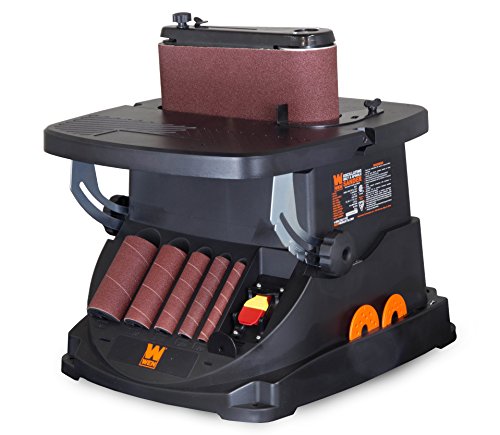 WEN 6524 Oscillating Belt and Spindle SanderCheck Amazon offer
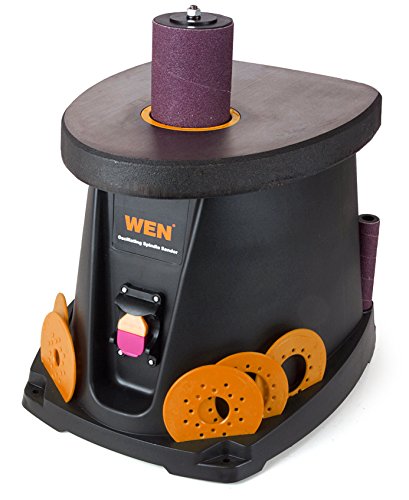 WEN 6510T 3.5 Amp Oscillating Spindle Sander,BlackCheck Amazon offer
Compare the approaches
| Decision | First option | Second option |
|---|---|---|
| G0739 | Fixed 15 × 11-1/2-in. cast-iron table; six sleeves through 3 in. | Compact dedicated choice; no belt, table tilt or exact retained offer |
| G0538 | 20 × 14-in. laminate-covered table; six sleeves through 3 in.; 2-1/2-in. port | Dedicated choice; motor-construction wording varies by document revision |
| G0723 | Fixed 18 × 18-in. cast-iron table; one-inch stroke; six sleeve diameters | Hold exact HP, amperage, drum length and insert count to serial-specific evidence |
| T27417 | 4 × 24-in. belt; five sleeves through 2 in.; 0–45° table with listed detents | Choose only when both modes recur; zero-to-2000-RPM text does not prove variable speed |
| Offer rule | No exact retained Amazon match for these four Grizzly models | Alternative brands remain labeled alternatives, not Grizzly substitutes |
Recognize the main families
G0739, G0538 and G0723 are all fixed-table dedicated benchtop spindle sanders, but their tables, dust connections, motion records and revision evidence differ. T27417 is the separate belt-and-spindle combination with a tilting table and a smaller maximum documented sleeve diameter. Grizzly also documents the floor-standing G1071. These are distinct research branches, not one brand-wide specification set; never transfer a sleeve assembly, table feature or disputed G0723 number to another model.
Use the largest part to choose support
A large table can be valuable even when the curve being sanded is quite small. The reason is support for the rest of the component. Put your largest intended workpiece on a temporary bench and imagine guiding its perimeter while keeping it stable. Note where an overhang would pull it downward or where a neighboring machine would obstruct rotation. That exercise helps determine whether to investigate a floor model or arrange supplementary support. Motor size alone does not resolve an awkward stance or an unsupported panel, so do this physical planning before comparing horsepower figures.
Compact machines have a clear role
A benchtop spindle sander can be an effective layout choice when most work consists of smaller brackets, templates, toy components, or furniture details. It keeps the sanding operation close to the bench and can avoid committing a separate section of floor. The tradeoff is the work required to install and store it if the bench has other duties. Consider a designated location with a consistent extraction connection and a place for abrasives. Buying a compact machine because it can be moved is less helpful when moving it is so inconvenient that you avoid using it.
Consider the combination on its own merits
The T27417 support page describes both spindle accessories and oscillation specifications, confirming that the combination is a distinct setup rather than a spindle-only machine with an informal add-on. A buyer should evaluate its belt surface for the actual straight-edge work that arises in the shop. If another suitable belt station already exists, the second function may bring little benefit. If space is scarce and both tasks recur, it may be useful. Also account for the removed assembly, the extra abrasive format, and the need to keep the correct washers and inserts organized during changes.
Build a parts and consumables record
Save a small inventory for the chosen Grizzly model: manual, model number, sleeve dimensions, drum sizes, table inserts, and required hardware. For secondhand equipment, compare this list with what is physically present before agreeing on value. Replacement abrasive sleeves are not the same as replacement spindle assemblies, and a generic diameter match is not sufficient evidence that mechanical parts fit. Ask the parts department about a specific item by its documented identifier. This is especially useful when an attractive used machine is missing a large spindle or a table insert required for angled work.
Make a short list you can explain
Give each Grizzly candidate a job on your shortlist. For example, a benchtop unit may qualify because all current parts are small; a floor machine may qualify because wide panels need support; a combination may qualify because straight edges consume most sanding time. Remove candidates whose advantage does not address a real task. Then compare the exact manuals and installation requirements. Published product pages are evidence of the machines' documented features, not a guarantee of present stock, delivery arrangements, or a measured improvement in your finish.
Questions about Grizzly Spindle Sanders: Bench, Combination, or Floor?
Which Grizzly family is appropriate for small parts?
Investigate the benchtop spindle family first, then compare the required sleeve sizes and table support with your parts.
Does more horsepower solve every sanding problem?
No. Workpiece support, usable access, abrasive choice, and setup can determine whether the machine fits the job.
Can I use another Grizzly model’s spindle assembly?
Only when the manufacturer confirms compatibility. Shared branding and sleeve diameter are insufficient.