brands
WEN Spindle Sanders: Choosing a Format and Model Family
WEN spindle sander searches lead to four meaningfully different choices: the fixed-table 6510T, beveling-table AT6535, belt-and-spindle 6524 and portable HA5932. Choose the work-support and machine format first, then check drum range, abrasive system, extraction and package identity. The comparisons below use WEN documentation and links to the corresponding models. They establish differences in format and equipment; no hands-on performance testing establishes a winner.
As an Amazon Associate I earn from qualifying purchases. How affiliate links work.
The four offers identify the four compared WEN models. Use the exact model label and WEN package documentation; these links do not establish current price, stock or cross-model sleeve, drum, washer, insert or dust-adapter compatibility.
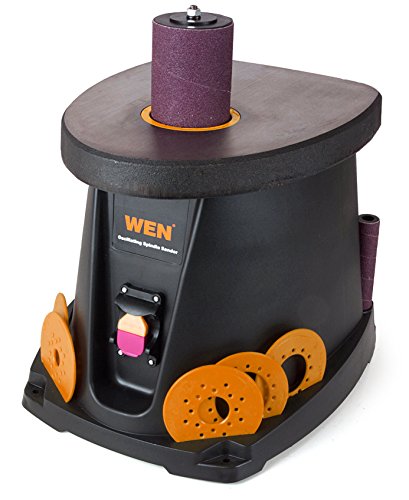 WEN 6510T 3.5 Amp Oscillating Spindle Sander,BlackCheck Amazon offer
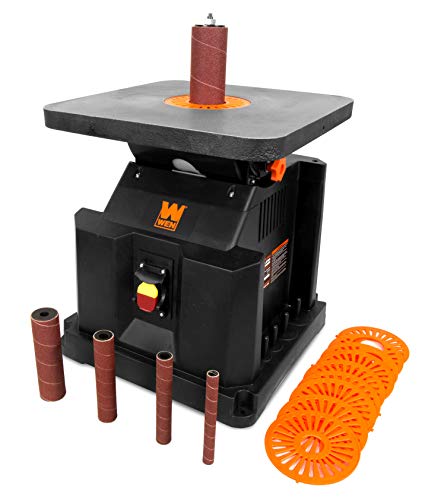 WEN AT6535 3.5-Amp Oscillating Spindle Sander with Extra Large Beveling Table TopCheck Amazon offer
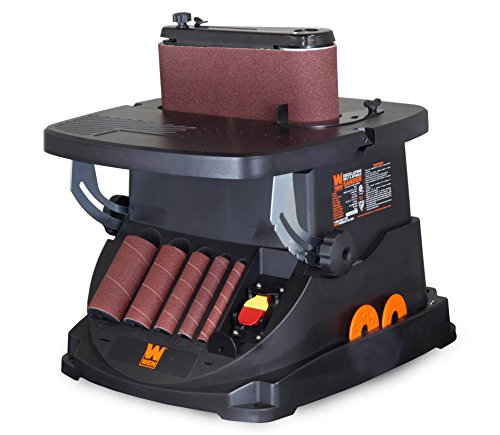 WEN 6524 Oscillating Belt and Spindle SanderCheck Amazon offer
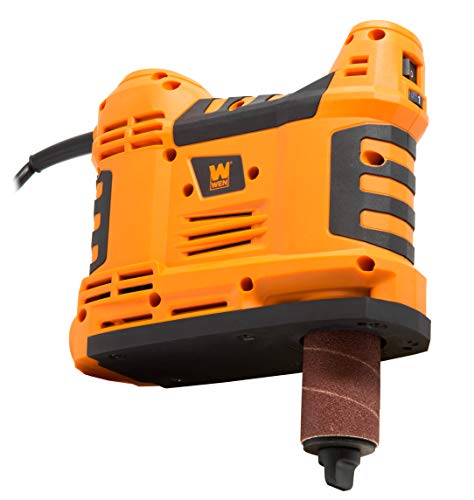 WEN HA5932 5-Amp Variable Speed Portable Oscillating Spindle SanderCheck Amazon offer
Side-by-side buying comparison
| Model | Family | Sleeve height (in) | Diameters (in) | Belt size | Table tilt | Offer |
|---|---|---|---|---|---|---|
| WEN 6510T | spindle | Not confirmed | 0.5, 0.75, 1, 1.5, 2, 3 | None documented | 0° | Check Amazon offer |
| WEN AT6535 | spindle | Not confirmed | 0.5, 0.75, 1, 1.5, 2 | None documented | 45° | Check Amazon offer |
| WEN 6524 | combo | 4.5 | 0.5, 0.75, 1, 1.5, 2 | 4 x 24 in. | 45° | Check Amazon offer |
| WEN HA5932 | portable | 3 | 0.5, 0.75, 1, 1.5 | None documented | Not confirmed | Check Amazon offer |
Check the model guides for regional variations and source qualifications. Table dimensions do not establish performance or material suitability.
Separate the three formats
WEN documents the 6510T as a fixed-table benchtop oscillating spindle sander, the AT6535 as a spindle-only machine with a 0-to-45-degree beveling table, the 6524 as a belt-and-spindle combination, and the HA5932 as a portable variable-speed tool with a supplied clamped arrangement. Those distinctions matter more than the shared branding. They solve different support, access and contact-shape problems rather than forming a simple good-better-best ladder.
Choose from your actual parts
Set out three pieces that represent your next project: the smallest inside curve, the longest edge, and the heaviest component. Imagine moving each across a stationary table. If almost every edge is curved and the pieces are easy to handle, start with the bench spindle family. If straight and curved edges alternate throughout an assembly, investigate the combination format. If a large panel would be awkward to maneuver, investigate the portable family and its approved mounting arrangements. A part that cannot be supported or moved comfortably rules out a format before motor figures enter the comparison.
Read the complete model number
WEN publishes separate product pages and manuals for 6510T and AT6535, so an abbreviated listing for a WEN spindle sander should prompt a closer look at the rating plate and manual. Similar names are not proof of identical tables, inserts, washers, ports or internal components. Record the full identifier when saving a manual or ordering a replacement. For a used machine, ask for a photograph of that plate and of the loose accessories. A listing can accidentally mix a photograph of one revision with a description copied from another, especially when the seller inherited the tool.
Evaluate changeovers and storage
The combination format makes sense only if its second function earns the bench area and the changeover effort. Think about where the removed belt assembly will sit, whether the spindle accessories stay together, and whether a dust hose interferes with reaching the back of the machine. Keep a small tray for hardware during setup. Before buying a bench unit, also decide whether it will remain bolted in place or move between storage and a work surface. A dedicated location makes occasional sanding easier to start, while shared bench space demands an orderly setup routine.
Plan abrasives as part of the purchase
Make a list of the diameters your projects need and compare it with the package contents for the exact model. A sanding sleeve is only one part of the assembly: the matching drum, washers, and table opening also matter. Do not assume that an accessory advertised for a generic oscillating sander fits every WEN family. Record sleeve length as well as diameter when checking replacements. Include a useful progression of grits in your budget, but avoid buying large assortments before you know which diameters you actually use. Consumable convenience can matter more than a small difference in purchase price.
A sensible buying decision
Prefer the simplest WEN format that handles your repeated work comfortably. The portable model's published variable speed is a feature to evaluate for controlled access, not evidence that it replaces the support of a bench table. Likewise, a belt attachment is useful when it solves a recurring task, not merely because it increases the feature count. Confirm the manual, required accessories, extraction connection, and regional electrical specification with the exact seller listing before ordering. Product documentation establishes what a model is designed to provide; it does not establish today's stock, shipping date, or your expected sanding result.
Use four stop rules before following an offer
Choose 6510T when square supported curves and its included 3-inch drum matter; stop if table tilt, a belt or portable access is required. Choose AT6535 when supported beveled curves recur; stop if its five sizes through 2 inches miss a required broad curve or if the unresolved dust-port label affects your connection. Choose 6524 when both its 4-by-24-inch belt and spindle mode earn their changeovers; stop if the belt merely duplicates another station. Choose HA5932 when a secured large or installed part is easier to approach with the tool; stop if the work cannot be clamped and the tool, hands and hose cannot follow the edge.
All four Amazon links identify the corresponding WEN models, but each is still a path to inspect rather than evidence of current price, stock or package completeness. Match the full model name, image and listed contents to the appropriate WEN page. Keep 6510T/AT6535/6524 bench-machine sleeves separate from HA5932's explicit 5932SPC replacement family, and never infer cross-model drum, washer or insert compatibility from a shared nominal diameter.
Questions about WEN Spindle Sanders: Choosing a Format and Model Family
Which WEN format should I consider for curved parts?
Start with the spindle-only bench family if your parts move comfortably across a table. Compare portable or combination designs when access or straight-edge work creates a separate need.
Are WEN spindle-sander sleeves and hardware interchangeable?
No. Use the full model number and exact replacement documentation. Shared nominal diameters do not establish the same sleeve height, drum, washer, spindle or throat-insert fit.
Does a WEN combination sander replace a thickness drum sander?
No. Its belt and spindle address edges and contours. A conveyor drum sander belongs to a different machine category for broad faces.