buying guides
Buying a Used Spindle Sander: Inspection Priorities
A used spindle sander can be a sensible purchase when its identity, condition, and accessory completeness are clear. It can also become an expensive parts hunt. Begin with the exact model number, serial number, electrical nameplate and manual before discussing whether the asking price is attractive. The State B-4 example below shows why a generic listing name is not enough. The aim is to buy a usable, supportable machine, not to price unknown defects optimistically because the motor happens to turn.
As an Amazon Associate I earn from qualifying purchases. How affiliate links work.
The retained catalog has no exact State B-4 listing. Offers on this page are current documented machines for comparison, not claimed replacements for the legacy State machine or its model-specific parts.
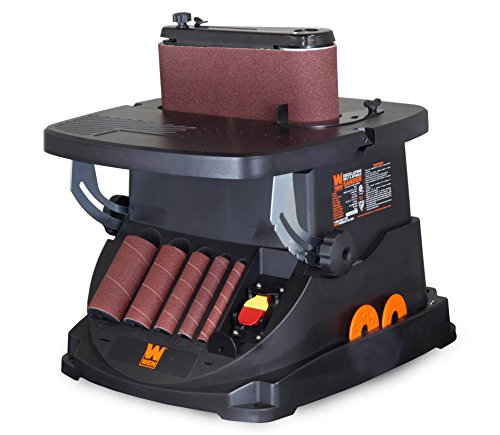 WEN 6524 Oscillating Belt and Spindle SanderCheck Amazon offer
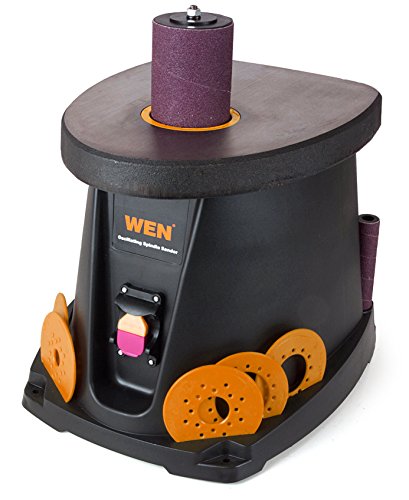 WEN 6510T 3.5 Amp Oscillating Spindle Sander,BlackCheck Amazon offer
Request useful evidence before visiting
Ask for a sharp model-label photograph, a view of the table and spindle, and a layout of the included accessories. Request disclosure of repairs, storage conditions, and any known operating problems. Compare those photographs with the manufacturer's parts and package lists. The Grizzly G0739 manual and JET JBOS-5 documentation illustrate the detail available for identifying components. If the seller cannot establish which model is offered, specifications from a similar-looking machine should not become the basis for your purchase.
Inventory the parts that make it operable
Count inserts, rubber drums where applicable, sleeve washers, securing hardware, and any dedicated wrench. For a combination machine, include the belt assembly and its associated stop or support components. Missing abrasive sleeves may be straightforward consumable replacements; missing machine-specific inserts or hardware can be more consequential. Check current availability and the full delivered replacement cost. Do not substitute a generic washer or homemade insert simply to make an incomplete machine look ready for a demonstration.
Identify a legacy State B-4 before valuing it
Freeman Manufacturing & Supply's official State B-4 manual identifies two electrical catalog configurations: 018215 is listed as a 1/2-horsepower 115/230-volt single-phase machine, while 018220 is listed as a 1/2-horsepower 230/460-volt three-phase machine. Both are documented for 60 Hz service. That makes the catalog, motor and electrical nameplates essential evidence: a seller's phrase such as “State spindle sander,” a photograph of the cabinet, or the fact that a motor turns does not resolve which configuration is being offered or whether a shop can power it correctly.
The manual lists ten spindle sizes from 1/4 by 5 inches through 4 by 9 inches, four throat rings and two wrenches as standard equipment. It also documents a POSITIV-LOK spindle system and tells owners to give the model and serial number when ordering parts. For a used B-4, photograph that serial information and inventory each spindle, rubber drum, throat ring and wrench against the manual. Treat missing machine-specific hardware as unresolved until an exact part is documented; a nominally similar drum, ring or washer is not proven compatible.
Condition checks can be model-specific too. The B-4 manual specifies counterclockwise rotation, a matching throat ring with no interference, and a taper pin that must be removed before changing table angle. Its maintenance section says the bearings are sealed, while the oscillation mechanism uses an oil bath checked at the sight glass. Those details are inspection prompts, not permission to energize questionable wiring or service a machine beyond your competence. No exact State B-4 offer exists in this site's retained Amazon catalog; current-machine offers on this guide are comparison paths, not substitutes or replacement-parts recommendations.
Inspect condition while power is disconnected
Look for damaged cords, broken switches, cracked parts, unauthorized modifications, heavy corrosion, and evidence of impact. Examine the table surface and adjustment locks without disassembling beyond the instructions or your competence. Check whether the base and mounting points are intact. Cosmetic marks and functional damage are different questions, but a low price does not resolve either automatically. If you find an electrical defect or uncertain repair, stop the inspection and seek qualified assessment rather than proceeding to a live test.
Watch a properly prepared operating demonstration
Only operate a complete machine in a safe, correctly mounted setup after reviewing its manual. Rotation alone does not confirm normal oscillation. Observe the motion, listen for abnormal noise, and stop if anything appears wrong. A controlled sanding demonstration with appropriate stock can reveal whether the table support and adjustments work as expected, but it is not a certification of internal condition. Do not reach toward the spindle or remove covers while powered to diagnose a noise or hidden mechanical issue.
Price unresolved work before negotiating
Prepare a separate line for each missing or damaged component, then add consumables, transport and qualified service. Use the model-specific parts guide to keep drawing references separate from orderable parts; if diagnosis points to the largest electrical assembly, use the replacement-motor guide rather than pricing a similar-wattage substitute. Compare that total against a complete documented alternative. A discontinued component can be a stronger reason to walk away than a modestly higher asking price.
Leave with records and a setup plan
Record the model, serial details, included parts and repair statements in the purchase documentation. A legacy Ryobi OSS450 needs a different identity and service investigation from a current documented model; the same principle applies to Delta, Craftsman and Powermatic legacy machines. Do not assume a previous owner's warranty or service agreement transfers. Before first use, repeat the exact installation and adjustment checks rather than trusting the seller's bench setup.
Use three lines in your negotiation notes: asking price, confirmed replacement parts, and necessary service or transport. List uncertain repairs separately instead of giving them an optimistic allowance. Normal rotation leaves another question unanswered if the seller cannot demonstrate oscillation in a complete, safe setup. Declining that machine does not require you to diagnose the internal fault or take on a restoration project.
Questions about Buying a Used Spindle Sander: Inspection Priorities
Is surface rust a reason to reject a used sander?
It depends on severity and location. Light cosmetic corrosion is different from pitting, damaged adjustment surfaces, or neglected moving parts. Inspect carefully and include restoration or service costs before deciding.
What if the machine runs but accessories are missing?
Identify the exact missing parts and confirm availability before purchase. A spinning motor does not make the tool usable with an oversized table opening or incorrect spindle hardware.
Can I rely on the original warranty?
Do not assume transferability. Consult the manufacturer’s current conditions and ask about the exact model, original purchase documentation, and ownership situation before assigning value to remaining coverage.