guides
Spindle Sanding Near Veneer: Protect Thin Faces
A spindle sander is an edge-shaping tool, not a general tool for sanding the broad face of a thin veneer. A veneered panel may have an edge that can be refined in an approved, supported setup, but the decorative face can be damaged by rocking, rounding, or contaminated support surfaces. Before sanding, distinguish solid wood from a thin bonded face and decide which layers must remain visible. When little material can be removed, a controlled hand method may be the better choice.
As an Amazon Associate I earn from qualifying purchases. How affiliate links work.
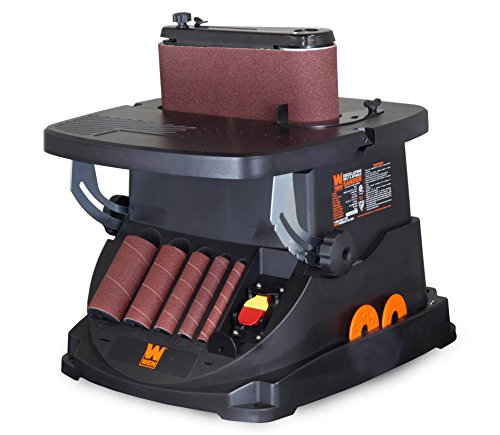 WEN 6524 Oscillating Belt and Spindle SanderCheck Amazon offer
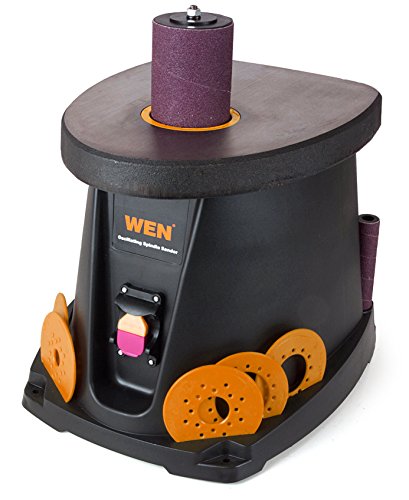 WEN 6510T 3.5 Amp Oscillating Spindle Sander,BlackCheck Amazon offer
Identify the layer you are protecting
Do not infer veneer thickness from the appearance of the grain. Obtain the panel specification when possible and examine a representative offcut. A commercially veneered board, shop-laminated panel, and plywood face may have very different available thicknesses. Establish the removal allowance before the substrate becomes exposed or the panel's intended appearance changes. On an existing finished piece, that allowance may be unknown. Treat uncertainty as a reason to reduce the ambition of the sanding operation rather than assuming an apparently thick surface can tolerate machine shaping.
Separate edge work from face work
A flat panel supported on a spindle-sander table presents its edge to the sleeve. That is fundamentally different from bringing the veneer face against a cylinder. The latter creates concentrated contact that can remove a decorative layer unevenly. Do not use the machine to chase a scratch across a broad veneered face. For legitimate edge refinement, preserve the reference face and intended edge angle. If the goal is merely to soften a sharp corner, consider whether a modest hand-sanding operation would provide more control over the very small amount of material involved.
Loose sheet veneer is not the supported workpiece described by the G0739 manual. Do not hold an unbacked sheet against the spindle, wrap it around a drum or rely on fingers near the abrasive to keep it flat. A veneered panel edge is only a candidate when the bonded panel is sound, stays supported on the table and can follow the required feed path with clear hand positions. A broad face, lifted edge, bubble, fragile overhang or unknown bond is a stop condition for this machine operation.
Use a four-case veneer decision
A sound factory-veneered panel with a supported curved edge may justify a representative offcut test. A shop-laminated panel also requires the adhesive and veneer supplier's cure and preparation instructions before that test. An already finished face adds scratch and coating risks at the table, so a controlled hand method may be preferable even when the edge is accessible. Loose veneer and broad-face defect removal belong outside the spindle-sander plan. In every case, stop at the first feathered edge, chip, bond movement or substrate exposure; no later grit can replace a decorative layer that has been sanded through.
Inspect the bond and the support surface
Loose veneer, bubbles, lifted corners, and gaps require evaluation before abrasive contact. Sanding a poorly bonded area can catch or remove material that should have remained intact. Also inspect the table, insert, and underside of the panel for particles that could scratch the face or cause rocking. A tiny piece of debris can alter the support enough to change the edge angle. Do not solve surface protection by adding a loose covering that slides or interferes with control. Any protective arrangement must remain compatible with the machine's approved handling requirements.
Preserve a clear edge reference
Mark the intended outline so it can be read without repeatedly turning the work into uncertain positions. If the edge will receive banding, a lipping, or a mating part, establish the required geometry before sanding. An accidentally rounded corner can leave a visible gap even though it feels pleasant to touch. During refinement, inspect both faces and the full edge height with the machine stopped. Stop if the veneer begins to feather, chip, or reveal a different layer. Additional sanding does not restore a face already worn through at the edge.
Choose the least demanding effective operation
The useful objective may be to remove a small cutting burr rather than reshape the panel. Match the method to that modest task. Where machine sanding is appropriate, test on an offcut with the same veneer, substrate, adhesive system, and finish condition. A solid-wood scrap is not a representative substitute for a bonded decorative layer. Avoid universal grit prescriptions; the veneer supplier and coating system may have their own preparation requirements. If the test shows that the desired cleanup threatens the face, revise the process before touching the final component.
Make a repair decision before the defect grows
A small chip, exposed substrate, or lifted corner may call for a specialized repair or replacement rather than further sanding. Decide based on the final appearance, structural role, and available repair methods. Do not assume stain or clear finish will hide a sand-through; changes in material and grain can become more visible after coating. Preserve offcuts for testing any proposed repair. Check both the machine's wood-sanding instructions and the veneer supplier's guidance: an allowed machine operation can still remove more of a decorative layer than the panel can spare.
Questions about Spindle Sanding Near Veneer: Protect Thin Faces
Can I sand a veneer face on a spindle sander?
A spindle sander’s concentrated cylindrical contact is generally unsuitable for broad veneer-face finishing. Choose a method that preserves the thin layer.
Can I refine a veneered panel edge?
Potentially, if the material and machine permit it and the panel stays supported. Protect the face, bond, and intended edge angle.
Will stain hide sanded-through veneer?
Do not assume so. Exposed substrate often behaves and looks differently. Test an appropriate repair or consider replacing the part.