guides
Spindle Sander Dust Collection: Plan and Troubleshoot
A spindle sander needs dust control suited to the machine, the material, and the collection system. Begin with the exact manual’s extraction requirements and the collector manufacturer’s compatibility information. A hose that connects physically is not proof that the system captures dust effectively. The opening around the sleeve, the route beneath the table, the hose, and the collector all influence the result. Treat visible escaping dust as a reason to investigate rather than as an unavoidable feature of a small sander.
As an Amazon Associate I earn from qualifying purchases. How affiliate links work.
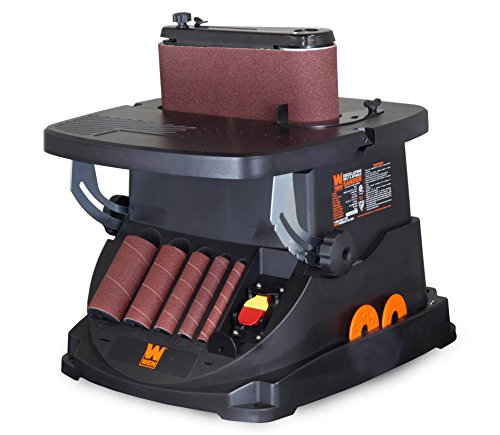 WEN 6524 Oscillating Belt and Spindle SanderCheck Amazon offer
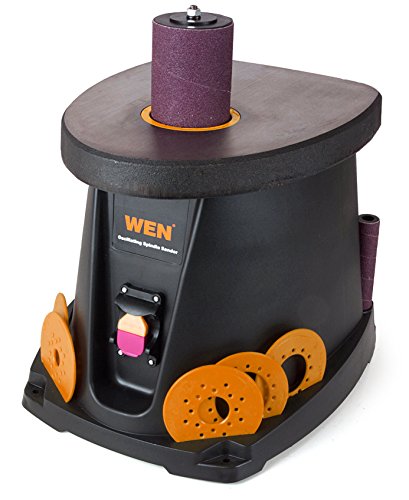 WEN 6510T 3.5 Amp Oscillating Spindle Sander,BlackCheck Amazon offer
Understand the capture path
Identify where the machine is designed to draw dust away from the contact area. Many benchtop designs use a path around the insert and beneath the table leading to an extraction port, but details vary. Inspect the accessible route with power isolated and compare it with the manual. Missing inserts, blocked openings, or inappropriate modifications can change the intended capture. Do not enlarge ports or cut away components in an attempt to improve suction without manufacturer approval. The collection arrangement should preserve the support and guarding functions of the machine as well as move air.
Match the collector to the requirement
Use the machine's specified extraction information and the collector's operating guidance to assess compatibility. Port diameter alone is incomplete information. A small connector, a long hose, and multiple sharp bends can affect the delivered airflow differently from a short direct connection. Likewise, the collector's advertised capacity may not describe performance at the actual tool connection. Use the extraction requirement for the actual sander; airflow requirements cannot be assumed identical across models. If the documentation is unclear, ask the manufacturers how the proposed arrangement should be evaluated rather than assuming any available shop vacuum or dust collector is equivalent.
Keep the hose out of the handling envelope
A hose can interfere with the work even when collection is adequate. Route and support it so the blank can follow its full sanding path without snagging or pulling the machine. Check this with power isolated during setup, especially for large internal cutouts that require movement behind the spindle. Consider access for sleeve changes and cleaning as well. A routing arrangement that must be disconnected or dragged across the table for every adjustment invites inconsistent use. Leave access to sleeve hardware and cleaning points so routine adjustments do not require moving the extraction hose out of service.
Investigate reduced collection methodically
If capture deteriorates, stop and follow the required isolation procedures before inspecting the system. Check for a disconnected or damaged hose, an obstruction, a full collection container, and filters needing service according to the collector instructions. Confirm that any relevant gates or selectors are set for the intended connection. Change one condition at a time and record the result. Do not assume the sander is inherently poor at collection until the existing system has been checked. Equally, do not assume apparent suction at a hose end proves adequate capture at the sanding contact point.
Treat filtration and exposure separately
Moving dust into a collector and keeping fine particles from returning to the room are related but distinct functions. Consult the collector's filtration guidance and the workplace's exposure-control requirements. CCOHS recommends operating sanders with suitable local exhaust ventilation and explains that wood dust can affect health. The absence of a large visible cloud is not a complete exposure assessment. Use the protective equipment required by the tool, material, and workplace, and seek competent occupational guidance when exposure needs to be evaluated. A collection system should be maintained as part of the process, not considered finished once a hose is attached.
Clean without redistributing the problem
Follow approved cleaning methods for the machine and collector. Blowing settled dust around the room or sweeping it aggressively can put material back into the air. Handle and dispose of waste according to the material and equipment instructions. Before adding plastic, coated stock or another unfamiliar material to a woodworking system, return to the material-limitations guide and the plastic-specific decision path. A different material can change both permission and collection requirements; a hose connection alone does not resolve either question.
Questions about Spindle Sander Dust Collection: Plan and Troubleshoot
Can I connect any vacuum to a spindle sander?
Check both manufacturers’ requirements. A fitting hose does not establish adequate airflow, filtration, or suitability for the material.
Why is dust escaping despite suction?
Possible causes include obstructions, hose losses, leaks, filter condition, or an unsuitable capture arrangement. Inspect the system methodically after isolation.
Does dust collection replace respiratory protection?
Follow the machine, material, and workplace requirements. Collection and personal protection serve different roles, and visible cleanliness alone does not establish exposure control.