models
Laguna SS|14: Stand, Spindle Package and Fit Guide
The Laguna SS|14 pairs a compact spindle-sanding machine with a stand, making it an option for shops that want a dedicated station without allocating a full bench. Its small-diameter spindle selection and tilting table are the main functional details. The current manufacturer page also contains differences between its headline package description and detailed specifications. This guide preserves those differences so an accessory order or comparison does not quietly turn an uncertain detail into a promise.
As an Amazon Associate I earn from qualifying purchases. How affiliate links work.
No exact Amazon offer was matched for this model. The listings below are alternative machines to investigate, not this model or guaranteed equivalents.
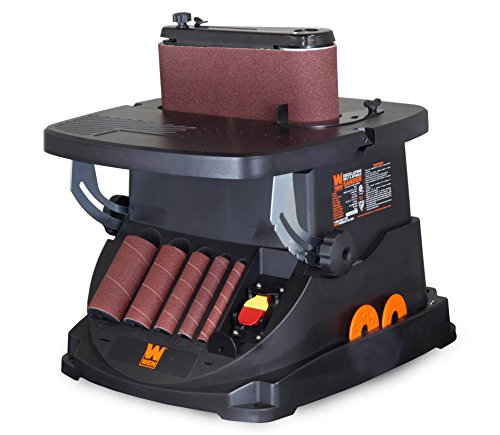 WEN 6524 Oscillating Belt and Spindle SanderCheck Amazon offer
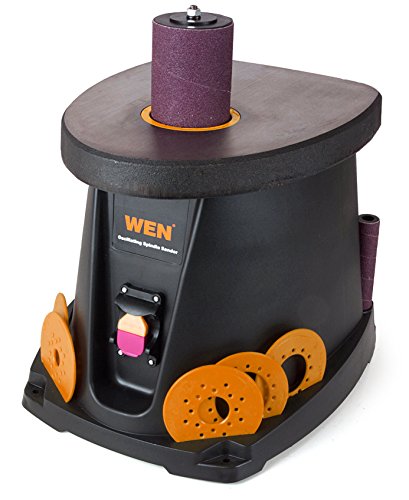 WEN 6510T 3.5 Amp Oscillating Spindle Sander,BlackCheck Amazon offer
Documented specifications for Laguna SS|14
| Model | Family | Sleeve height (in) | Diameters (in) | Belt size | Table tilt | Offer |
|---|---|---|---|---|---|---|
| Laguna SS|14 | floor | Not confirmed | 0.25, 0.5, 0.625, 1.5, 2 | None documented | 45° | No exact offer matched |
- Machine weight
- 66 lb
- Documented spindle speed
- 1725 RPM
- Dust port
- 2 in
Floor family reflects supplied stand; compact machine format.
Current intro includes bonus 3-inch spindle and insert; detail list only five smaller sizes. Confirm package.
Page conflicts on stroke: 15/16 inch versus 1 inch.
Product page publishes a single 5.5-inch sleeve length, while the current OVS-TL manual lists 6-inch small drums and 5.6-inch 1.5-, 2- and optional 3-inch drums; exact consumable height remains assembly-specific.
Current US page identifies SKU MSANOS14x14-110V-1/2-0320, 110V, 7.5A and a NEMA 5-15P plug.
Nominal abrasive dimensions do not prove whole assembly compatibility.
The stand determines the real footprint
Laguna lists a 25-by-25-inch footprint and a 39-inch table height, even though the work surface is 14-1/2 inches square. That distinction matters when allocating floor space. A stand can free a workbench, but it occupies its own area and still needs clearance for the operator and the complete sweep of the workpiece.
Use the larger installation outline when sketching your shop. Check where the dust hose will run and whether a nearby cabinet door can still open. A long rail or irregular panel may extend beyond the table on several sides while its inside curve is sanded. If a mobile arrangement is planned, verify an appropriate supported and lockable solution rather than assuming any wheeled base can safely carry the assembled station.
Confirm which spindles are in the offered package
The current manufacturer introduction says six spindles are included, with a 3-inch spindle and insert at no extra charge. The detail list names only 1/4, 1/2, 5/8, 1-1/2 and 2 inches, reflecting the five smaller sizes. This guide records those five as the core documented set and treats the 3-inch item as a package inclusion to confirm with the seller.
Ask for an itemized contents list when ordering or inspect the accessories when buying used. A photograph showing a large drum is helpful, but confirm its matching insert and complete mounting hardware too. The extra diameter is useful only if the assembly can be installed correctly. Older stock or a secondhand machine may not match a current promotional package, even when its model name is identical.
Keep the sleeve specification separate from hardware fit
Laguna's product page publishes a single 5.5-inch sanding-sleeve length, while its current OVS-TL manual is more specific: the 1/4-, 1/2- and 5/8-inch drums are listed at 6 inches long, and the 1-1/2-, 2- and optional 3-inch drums at 5.6 inches. Those are assembly dimensions, not permission to order every abrasive at the same height. Confirm the sleeve part for the exact spindle and package.
If ordering consumables from an independent supplier, provide the model, assembly diameter and existing sleeve measurement. For a complete spindle, request explicit compatibility with the mounting interface and retention system. Keep original part numbers in a notebook or on the storage rack. Avoid mixing unmarked assemblies from different machines; similar paint and a similar diameter can obscure important differences in thread direction, shoulder seating or working height.
A table bevel requires an orientation plan
The manufacturer describes a tilting table, with its detail range expressed as 45 to 90 degrees. In conventional comparison terms that represents up to 45 degrees away from the square-edge position. Check the manual's angle convention when setting the machine instead of assuming every scale uses the same zero reference.
For a tapered curved component, mark the face that rests against the table and make an offcut sample. After locking the angle, check the sample with a reliable reference. On paired parts, decide whether they require matching or mirrored bevels before beginning. Maintaining a supported face while following the curve is more important than trying to move rapidly. Pause to inspect changes in bevel width where the stock thickness or profile changes.
Treat motion and weight figures as approximate planning data
The page gives 1,725 RPM and 29 oscillations per minute, but describes the stroke as 15/16 inch in one place and 1 inch in another. That discrepancy should be checked if stroke is critical to an application. The current US listing identifies SKU MSANOS14x14-110V-1/2-0320, 110 volts, 7.5 amps and a NEMA 5-15P plug; the manual calls the underlying machine OVS-TL. Keep both identifiers with the serial record rather than assuming every older or regional SS|14 has the same electrical configuration.
Those numbers support a first layout and comparison, not a measured claim about finish or removal speed. Plan extraction with the actual connector and hose run, and support the hose so it cannot pull on the station. When evaluating a demonstration, inspect both visible oscillation and the quality of work support. A large spindle moving correctly does not establish that every narrow assembly in a used package is straight, complete and usable.
Match the station to recurring work
The SS|14 format is most worth considering when you want a sander ready to use without clearing an assembly bench. That convenience can encourage short, controlled sanding sessions between other operations. It becomes less valuable if its floor position prevents the workpiece from being steered comfortably.
List the parts you expect to sand and identify their smallest cutouts, broadest inside curves and usual bevels. Compare those needs with the confirmed package rather than buying around the largest advertised spindle. Budget time for setup verification and an abrasive inventory in the sizes you actually use. This is a selection framework, not a claim that the machine has been tested against competitors.
Questions about Laguna SS|14: Stand, Spindle Package and Fit Guide
Is the 3-inch spindle included?
The current introduction says yes, while the detailed list names five smaller spindles. Confirm the exact seller package, especially with older stock or used machines.
Does SS|14 tilt the spindle like SS|24T?
No. SS|14 is documented with a tilting table. The SS|24T uses a different arrangement in which the spindle tilts.
Why are two oscillation strokes mentioned?
The current manufacturer page states both 15/16 inch and 1 inch. This guide flags the discrepancy instead of presenting either as universally exact.