guides
Spindle Sander Not Oscillating: Safe Diagnosis
If an oscillating spindle sander rotates but no longer moves vertically, stop using it and consult the troubleshooting instructions for the exact model. Rotation and oscillation are different motions, and one can appear normal while the other has a fault. Do not assume that continued rotation makes the machine suitable for use as a non-oscillating sander. The missing movement may indicate a drive or mechanism problem that requires repair, and the machine should be returned to its intended operating condition.
As an Amazon Associate I earn from qualifying purchases. How affiliate links work.
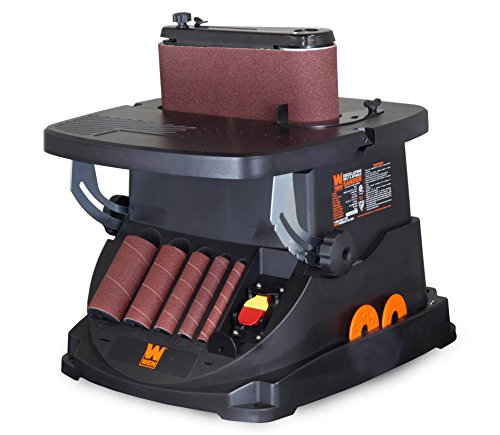 WEN 6524 Oscillating Belt and Spindle SanderCheck Amazon offer
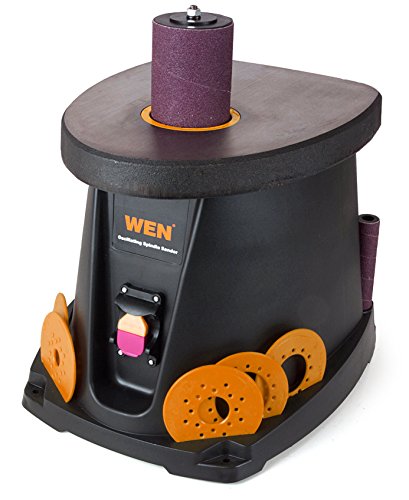 WEN 6510T 3.5 Amp Oscillating Spindle Sander,BlackCheck Amazon offer
Confirm what has changed
First distinguish a model that is designed to oscillate from a tool that only rotates. Check the nameplate and manual, especially on unfamiliar or used equipment. Then describe the observed change: no vertical movement, an irregular stroke, a new noise, or movement that stops only when the work contacts the sleeve. Do not reach toward the moving spindle to feel for travel. Compare the observed travel with the documented motion. Never force or manually assist the spindle while it is powered.
Record the sequence around the failure
Useful details include whether the issue began after moving the machine, changing a sleeve, experiencing a jam, or noticing an unusual smell or sound. Record whether rotation also slows and whether the symptom occurs before workpiece contact. A concise history helps technical support choose the appropriate next step. Avoid repeated startups merely to collect more observations once abnormal behavior is evident. If safe documentation already exists, use it. Otherwise, a clear written description and power-isolated photographs of the external setup are preferable to exposing a running mechanism.
Rule out an obvious setup obstruction
With power disconnected, inspect the externally accessible sleeve assembly, insert, and surrounding area as permitted by the manual. A wrong component or trapped debris may interfere with movement. Confirm that the installed accessory combination is approved and assembled correctly. This inspection should not become an invitation to dismantle internal drives without instructions. If no external discrepancy is apparent, record that result and move to the model's troubleshooting guidance. Knowing that the correct insert and sleeve are installed is useful evidence, but it does not prove the internal mechanism is sound.
Use the exact service information
Different sanders transmit motion through different arrangements. A belt, gear, linkage, or other component described for one model may not exist in another. Obtain the manual for the correct production revision and follow the manufacturer's limits on owner maintenance. Exploded diagrams help identify parts but do not necessarily provide a safe repair procedure. Before ordering a replacement from a symptom alone, ask whether the manufacturer can confirm the diagnosis. This avoids replacing a plausible component while leaving the actual cause, associated damage, or assembly error unresolved.
Do not convert a fault into a feature
It can be tempting to continue because a rotating sleeve still removes wood. That choice assumes the failed mechanism is harmless and stable, which has not been established. Likewise, disabling the oscillation drive or removing a belt to create a different machine is an unapproved conversion unless the manufacturer explicitly supports that configuration. Keep guards and covers in place and do not operate with internal components exposed to watch them. The correct objective is a verified repair or a manufacturer-approved disposition, not a workaround that extends use of an unexplained fault.
Verify the repair against normal behavior
After an authorized repair, complete the specified reassembly and test-run procedure before returning to project work. Confirm that the original symptom is resolved and that no new noise, vibration, or interference has appeared. Preserve the service record and any replacement-part details with the machine manual. If the behavior returns, the earlier history becomes valuable evidence rather than a forgotten incident. Obtain belt tensions, lubrication requirements, and internal adjustment procedures from the service instructions for that model, or leave those tasks to a qualified repairer.
Questions about Spindle Sander Not Oscillating: Safe Diagnosis
Can I keep sanding if it still spins?
Stop and resolve the missing oscillation. Continued rotation does not establish that the machine is safe or mechanically sound.
Is a broken belt always the cause?
No. Mechanisms vary, and the same symptom can have several causes. Use the correct model’s troubleshooting information.
Should I open the housing while it runs?
No. Do not expose moving mechanisms or defeat covers to diagnose the problem. Use approved, power-isolated inspection and qualified service.