guides
Spindle Sander Sleeve Slipping: What to Check
A sanding sleeve that slips, creeps upward, or stops while its support continues moving indicates a problem that should be corrected before sanding resumes. Stop the machine, wait for motion to end, and disconnect power. Possible causes include an incorrect sleeve, an assembly problem, damaged or contaminated support components, or excessive contact pressure. The symptom alone does not identify which one applies. Begin with the simplest documented checks instead of increasing fastener force or adding makeshift material beneath the abrasive.
As an Amazon Associate I earn from qualifying purchases. How affiliate links work.
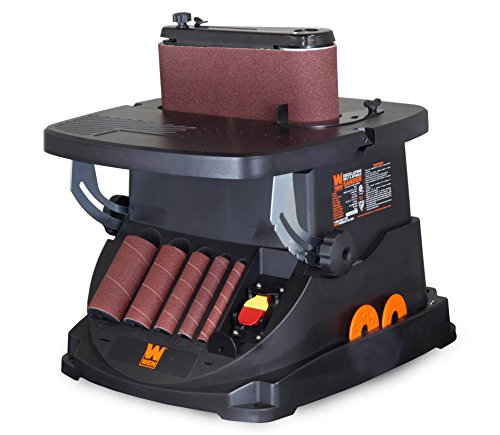 WEN 6524 Oscillating Belt and Spindle SanderCheck Amazon offer
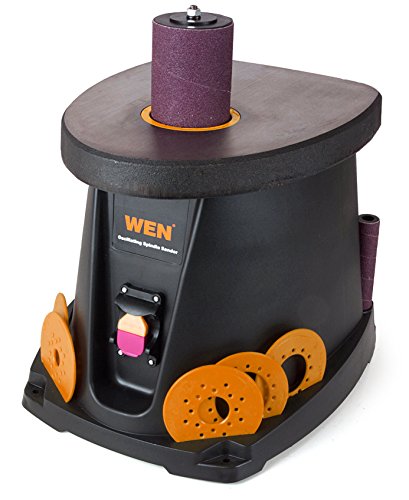 WEN 6510T 3.5 Amp Oscillating Spindle Sander,BlackCheck Amazon offer
Describe the symptom precisely
Note whether the sleeve moves vertically, rotates relative to the drum, wrinkles, or loses cutting effectiveness without visible movement. Those observations point to different possibilities. A loaded sleeve can feel as though it is slipping because it removes little wood, even when it remains firmly retained. A motor slowing under excessive load is different from the abrasive slipping on its support. Record when the behavior started: after a sleeve change, with a new abrasive brand, on one diameter, or only during a particular cut. A problem that starts immediately after a sleeve change directs attention to fit and assembly; a recurring problem with correctly fitted sleeves also warrants checking the support components.
Verify the replacement dimensions
Check the sleeve's stated diameter and length against the machine requirements and the intended drum. Similar nominal labels do not guarantee a proper fit across unrelated accessory systems. Confirm that the abrasive is intended for this type of machine and is not an improvised cylinder assembled from another product. Look for distortion or a damaged seam. If only one new sleeve behaves poorly while a correctly specified equivalent fits normally, that is useful evidence to discuss with the supplier. It still does not justify modifying the machine to accommodate the suspect sleeve.
Compare hardware with the diagram
With power isolated, inspect the assembly order and the required washers, retaining nut, drum, and lower support. Missing or incorrect hardware can prevent the intended retaining action even when the nut feels tight. A fastener may reach a mechanical limit without securing the sleeve properly. Do not diagnose retention by wrench effort alone. The manual's arrangement matters more than the apparent tightness. If parts were inherited with a used machine, confirm their identity; a previous owner's substitute washer can look plausible while failing to perform the correct function.
Inspect support condition and contamination
Look for cracks, glazing, deformation, or material caught between the sleeve and its support. Use only cleaning methods and products permitted for the components. Avoid solvents or abrasives chosen solely because they seem likely to improve grip; they may change the rubber or leave a residue. A worn or damaged drum requires an approved replacement. Keep the observation specific when asking for service: identify the size, the damaged area, and whether other assemblies are affected. This is more useful than reporting only that the entire sander has become unreliable.
Review how the work is contacting the sleeve
If the assembly is correct and sound, examine whether the operation asks the abrasive to remove too much material at once. An uneven rough cut can tempt the operator to press harder at a single bulge. A sleeve too small for a broad curve concentrates contact. A loaded abrasive can lead to rising pressure as removal slows. Improve the preparation and select an appropriate approved setup rather than treating retaining force as the only variable. Do not conduct prolonged loaded tests with a slipping sleeve; the cause should be addressed before the next ordinary pass.
Know when to stop owner troubleshooting
If correct parts and assembly do not restore secure operation, contact the manufacturer or qualified service provider. Supply the model identification, accessory dimensions, photographs taken with power isolated, and a description of the symptom. Do not add glue, tape, oversized washers, altered threads, or extra nuts as a workaround. Those changes can conceal the original issue and create a different retention problem. Before resuming work, complete the prescribed checks with the correct components installed. One pass without visible slipping does not resolve an unexplained retention fault.
Questions about Spindle Sander Sleeve Slipping: What to Check
Why does my sanding sleeve move upward?
Possible causes include incorrect fit or retaining assembly, damaged components, or excessive load. Stop and inspect using the model manual.
Should I tighten the nut harder?
Only tighten as instructed by the manufacturer. More force can damage parts and will not correct a wrong sleeve or missing washer.
Can a clogged sleeve feel like slipping?
Yes. Poor cutting, motor slowdown, and actual sleeve movement are different symptoms. Identify which occurs before choosing a remedy.